
Knowledge
📖
Old Manuscripts
📊 86 old manuscripts and books on this page
- • library books and manuscripts from 6 libraries and archives
- • plus ancient and traditional texts: India, Greece and Rome, the Talmud, Arabic and Tibetan medicine, homeopathy
Counted automatically from the entries below; every entry links to its source. The collection keeps growing.
Long before laboratories, people wrote down what they knew about urine: how to read it, and how to heal with it. This page gathers old manuscripts and rare medical books held by libraries around the world, oldest first. Each entry says what the book is and links to the library that keeps it, where the scans can often be seen.
📑 On this pageTap a title to jump straight to it.
━━━━━━━━━━━━━━━━━━━━━━━━━━━━
🕉️ SHIVAMBU KALPA VIDHI (DAMAR TANTRA)
━━━━━━━━━━━━━━━━━━━━━━━━━━━━
📖 Shivambu Kalpa Vidhi, from the Damar Tantra (Sanskrit, India; traditionally said to be about five thousand years old)
107 verses in which Lord Shiva teaches the Goddess Parvati the practice of Shivambu, "the water of Shiva": how to collect and take it, the benefits said to follow month by month, herbal combinations for each season, massage, and the mantras recited during the practice. It is the text most often quoted by modern Shivambu practitioners.
Read all 107 verses in English (The Water of Shiva) ↗
Related manuscript: a Sanskrit manuscript of a Shaiva Tantra named Bhuta Damara Tantra, digitized by the British Library. Whether it contains the Shivambu verses has not been checked.
Bhuta Damara Tantra, Sanskrit manuscript, British Library Endangered Archives ↗
↑ Back to contents
━━━━━━━━━━━━━━━━━━━━━━━━━━━━
⚔️ URINE IN WAR
━━━━━━━━━━━━━━━━━━━━━━━━━━━━
📖 Thomas Vicary, surgeon to King Henry VIII: The Anatomie of the Bodie of Man (1548) and The English-mans Treasure (London, 1580s)
 Image: Wellcome Collection, Public Domain
Vicary was the royal surgeon of England. Popular histories say he recommended washing soldiers' battle wounds with urine; his books are kept and digitized by the Wellcome Collection (London), so the original wording can be checked there.
The anatomie of the bodie of man, Thomas Vicary (Wellcome Collection) ↗
The English-mans treasure, Thomas Vicary (Wellcome Collection) ↗
📖 World War I (Ypres, 1915)
When chlorine gas was first used, soldiers were told to breathe through cloth soaked in urine until gas masks arrived; the ammonia in urine was thought to neutralize the chlorine. This is widely reported in histories of the war.
📖 Armies and sailors without water, recorded by John G. Bourke (1891)
In his huge survey of urine customs, the US Army officer and ethnologist Bourke gathers cases from old chronicles: the army of Crusaders under Peter the Hermit, besieged by the Muslims at Nicomedia (1096), "compelled to drink their own urine"; shipwrecked English seamen who "drank human urine for want of water"; and in 1877 Captain Nicholas Nolan of the US Tenth Cavalry, lost on the Staked Plains of Texas, whose troop lived for several days on the blood of their horses and their own urine. He also cites a labourer buried under a fall of earth in 1522 who nourished himself for seven days on his own urine.
Bourke, Scatalogic Rites of All Nations, 1891 (free, Internet Archive) ↗
↑ Back to contents
━━━━━━━━━━━━━━━━━━━━━━━━━━━━
🏺 ANCIENT MESOPOTAMIA: ASSYRIAN CLAY TABLETS
━━━━━━━━━━━━━━━━━━━━━━━━━━━━
📖 Assyrian medical tablets from Nineveh (7th century BC), British Museum: BAM 520 and BM 123362
 Tablet BAM 520 (K 9503+), Nineveh. Photo © The Trustees of the British Museum, via CDLI
About a thousand medical clay tablets survive from Babylon and Assyria, most of them from the library of King Ashurbanipal at Nineveh. On two of them, which repeat the same prescription, human urine (šīnāt amēlūti, written KÀŠ a-me-lu-ti in cuneiform) is part of a remedy for a man with a persistent fever who groans and sweats: malt water and human urine are heated in a tannour oven with cedar, juniper and a tree cone, the mixture is kept soaking, and acacia is added; the rest of the line is broken off. The tablets were translated by Markham J. Geller and Strahil V. Panayotov in an open-access edition (De Gruyter, 2020). The Dutch Assyriologist Marten Stol also lists human urine among the drugs of Mesopotamian medicine (1993).
Read the translation (Geller & Panayotov 2020, open access) ↗
Read the tablet line by line in English (Oracc, NinMed project) ↗
↑ Back to contents
━━━━━━━━━━━━━━━━━━━━━━━━━━━━
🏛️ ANCIENT GREECE AND ROME
━━━━━━━━━━━━━━━━━━━━━━━━━━━━
📖 Dioscorides, De materia medica (1st century AD)
The Greek physician Dioscorides wrote the most important book of medicines of the ancient world, used for some 1,500 years. Its second book, on medicines from animals and living creatures, includes human urine (ouron). A copy made in Constantinople in the mid-10th century, now at the Morgan Library in New York, even pictures it as a vial of urine.
Dioscorides, De materia medica, Constantinople copy, page with human urine (Morgan Library) ↗
📖 Galen (2nd century AD)
The great Greek physician of Rome once advised a patient to urinate on his wounds. He found it disgusting and would not prescribe it to his "urban and famous" patients, but he knew it to be an effective remedy.
Galen and Dioscorides (Explore Galen) ↗
📖 Pliny the Elder, Natural History, Book 28, Chapter 18: "Remedies derived from the urine" (Rome, 1st century AD)
The great Roman encyclopedia lists urine remedies: children's urine for eye complaints, burns and ear infections; stale urine for running ulcers, sores, burns, chapped skin and scorpion stings; midwives, he writes, found no lotion that removes itching more effectually. And he states plainly: "every person's own urine is the best for his own case", applied immediately and unmixed, for example on a dog bite or a hedgehog quill in the flesh.
Pliny, Natural History, vol. 5 (Bostock & Riley translation, free on Project Gutenberg) ↗
↑ Back to contents
━━━━━━━━━━━━━━━━━━━━━━━━━━━━
⚜️ FRANCE
━━━━━━━━━━━━━━━━━━━━━━━━━━━━
📖 Pierre Fauchard, Le Chirurgien Dentiste (Paris, 1728)
The "father of modern dentistry" advised rinsing the mouth every morning and evening with a few spoonfuls of one's own urine, just after it has been passed, admitting it is not very pleasant "except inasmuch as it brings distinct relief". He used it for toothache and early tooth decay.
Pierre Fauchard, father of modern dentistry (Encyclopedia.com) ↗
📖 "Essence of urine" at the court of Louis XIV (1670s–1680s)
In 1671 the chemist Matte la Faveur collected about sixty pints of urine from little children to make a volatile salt from it, sold to the rich. In 1685 the famous letter-writer Madame de Sévigné told her daughter that she took "eight drops of essence of urine" for her "vapours".
A history of urine: Boyle, Willis, Madame de Sévigné (Stephen Liddell) ↗
📖 Noël Chomel, Dictionnaire Oeconomique (1709)
One of the most popular household books of 18th-century France, reprinted for 70 years in several languages, gives remedies made with the urine of a male child.
Noël Chomel's remedies, Dictionnaire Oeconomique (Alpha History) ↗
📖 Brittany (19th century)
In 1888 the French naval captain Henri Jouan wrote that in his home region the urine of a healthy young man was used to wash the breasts of a woman who had just given birth.
1847: wash maternal bosoms in a young man's urine (Alpha History) ↗
↑ Back to contents
━━━━━━━━━━━━━━━━━━━━━━━━━━━━
🇬🇧 ENGLAND: THE FATHERS OF SCIENCE
━━━━━━━━━━━━━━━━━━━━━━━━━━━━
📖 Robert Boyle and Thomas Willis (17th century)
Robert Boyle, called the father of chemistry, advised certain patients to drink every morning "a moderate draught of their own urine", while still warm. Thomas Willis, then the richest doctor in England, told a young lady to drink her own warm urine against "extreme sourness" in her throat.
A history of urine: Boyle, Willis, Madame de Sévigné (Stephen Liddell) ↗
↑ Back to contents
━━━━━━━━━━━━━━━━━━━━━━━━━━━━
📚 BOURKE'S SURVEY OF URINE IN MEDICINE (1891)
━━━━━━━━━━━━━━━━━━━━━━━━━━━━
📖 John G. Bourke, Scatalogic Rites of All Nations (Washington, 1891), chapter "Ordure and Urine in Medicine"
Bourke, a US Army captain and ethnologist, compiled urine remedies from about a thousand authorities, from Dioscorides, Galen and Avicenna to European folk medicine. Among them, from Daniel Beckherius' Medicus Microcosmus (London, 1660): a drink of one's own urine taken while fasting for obstructions of the liver and spleen, dropsy and jaundice, drunk every morning for some time; one's own urine as a lotion for palsy; bathing the feet in one's own urine for gout and for travel sores; urine as a lotion for wounds, bruises and ulcers; and one's own urine drunk as a protection from the plague, which Beckherius says he knew "of his own knowledge" had been used "with wonderful success between 1620 and 1630".
Bourke, Scatalogic Rites of All Nations, 1891 (free, Internet Archive) ↗
↑ Back to contents
━━━━━━━━━━━━━━━━━━━━━━━━━━━━
🌿 HOMEOPATHY: URINUM
━━━━━━━━━━━━━━━━━━━━━━━━━━━━
📖 John Henry Clarke, A Dictionary of Practical Materia Medica, vol. II (London, 1902), pages 1480–1481
 Page 1480 of Clarke (1902), public domain, scan: Google Books via Internet Archive
The classic reference book of homeopathy lists Urinum, a remedy made from urine, for acne, boils, dropsy, eye inflammation and scurvy, and opens: "Urinotherapy is practically as old as man himself." Clarke gathers cases reported in the British Medical Journal of 1900 and by other doctors: a youth cured of boils that nothing else could remedy by drinking a cupful of his own urine on the mornings of a nine-day course; blackheads cured the same way; chronic bronchitis much relieved; ague in the Lincolnshire fens; nettle rash; children's eye inflammation treated in Switzerland by bathing the eyes in their own urine; croup. He notes that the Chinese treat wounds by sprinkling urine on them.
Clarke, A Dictionary of Practical Materia Medica, vol. II, 1902 (free, Internet Archive) ↗
📖 Scurvy cured in Andersonville prison (American Civil War, 1860s)
From the same entry: in the Confederate prison at Andersonville, starving prisoners were dying by the hundreds of scurvy. One of them, Mr. T., whose legs were so contracted he could only move on his elbows, told how they let their urine stand until it began to sour, then took "a good swallow" four or five times a day. The treatment cured him and all the companions who adopted it.
Clarke, A Dictionary of Practical Materia Medica, vol. II, 1902 (free, Internet Archive) ↗
↑ Back to contents
━━━━━━━━━━━━━━━━━━━━━━━━━━━━
🌙 ARABIC MEDICINE
━━━━━━━━━━━━━━━━━━━━━━━━━━━━
📖 Dawud al-Antaki, Tadhkira (16th century)
One of the best-known books of Arabic medicine. Writing about urine as a medicine, al-Antaki ranks human urine first: "The most effective types are human urine then the camel's."
Al-Antaki on urine, quoted in a study of the camel milk and urine hadiths (Bismika Allahuma) ↗
↑ Back to contents
━━━━━━━━━━━━━━━━━━━━━━━━━━━━
🏔️ TIBET: URINE IN THE MONASTERY TRADITION
━━━━━━━━━━━━━━━━━━━━━━━━━━━━
Most of Tibet's old books were destroyed or scattered during China's Cultural Revolution (1960s–70s), but copies survived: the Buddhist Digital Resource Center, founded by the scholar Gene Smith, has digitized over 27 million pages of Tibetan and Buddhist texts, medicine included, free to read online.
Buddhist Digital Resource Center (free digital library) ↗
📖 Urine among the "five nectars"
In Tibetan Buddhist tantra, urine is counted among the five ambrosias (pañcāmṛta), the sacred "nectars". This is the tradition behind the healing "mani pills", consecrated in long tantric rituals, prepared every year under the Dalai Lama and given out free to Tibetan Buddhists worldwide. (The study does not say whether today's pills contain urine.)
Study of the Tibetan mani pills (Asian Studies Review) ↗
↑ Back to contents
━━━━━━━━━━━━━━━━━━━━━━━━━━━━
📜 THE TALMUD AND JEWISH FOLK MEDICINE
━━━━━━━━━━━━━━━━━━━━━━━━━━━━
📖 Babylonian Talmud, Shabbat 109b (around 500 AD)
Among the remedies the rabbis discuss, Rabbi Chanina says that a person stung by a wasp should drink a small cup of urine that is forty days old (another reading: the urine of a forty-day-old baby).
Shabbat 109b, summary of the page (Dafyomi Advancement Forum) ↗
📖 Urine in later Jewish medicine
Jewish folk remedies kept using urine as a medicine: Rabbi Yudel Rosenberg (1859–1935) gave it as a treatment for swelling in a book printed in Piotrków in 1911, and rabbinic writers of the plague years advised drinking the urine of a young healthy boy each morning.
On the uses of urine in Jewish tradition (Talmudology, Dr. Jeremy Brown) ↗
↑ Back to contents
━━━━━━━━━━━━━━━━━━━━━━━━━━━━
⚗️ ALCHEMY AND THE ROSICRUCIANS
━━━━━━━━━━━━━━━━━━━━━━━━━━━━
Alchemist-physicians made medicines from urine. Their ideas later flowed into Rosicrucian and Masonic circles: a Masonic encyclopedia notes that much of alchemy was taken into Freemasonry in the eighteenth century.
📖 Testamentum Fraternitatis Roseae et Aureae Crucis (Testament of the Brotherhood of the Golden Rose Cross)
A Rosicrucian alchemical text about making medicine. It teaches that the "stone" and the alkahest (universal solvent) can be prepared from urine by a person who lives chastely and purely, and gives the distilling steps, calling the salt obtained "sal sapientiae", the salt of wisdom.
Testamentum Fraternitatis Roseae et Aureae Crucis, English translation ↗
↑ Back to contents
━━━━━━━━━━━━━━━━━━━━━━━━━━━━
🌲 RUSSIA AND SIBERIA: VILLAGE MEDICINE
━━━━━━━━━━━━━━━━━━━━━━━━━━━━
📖 Pyotr A. Gorodtsov, "Urine (Urina) in folk medicine" (typescript, village of Artamonovka, Tyumen district, Siberia, August 1908; dated 1915 in the library record)
 First page of the typescript (1908). Scan: Internet Archive
The Siberian ethnographer Gorodtsov (1865–1919) recorded how peasants in his district healed with urine. Wounds, grazes, bruises, swellings from blows, and even broken and crushed bones, he writes, "are almost always treated with urine" in peasant life: the place is washed with warm, fresh urine and wrapped in combed hemp soaked in urine, changed three or four times a day so it never dries. He saw it himself: a 17-year-old village lad whose hand was crushed and forearm broken in a windmill was treated with urine alone, with a good result, though the hand stayed deformed. Eye problems were washed with urine and bandaged with urine-soaked hemp, which he says soothes the pain. Wounds of farm animals were treated with human urine, not animal urine. Taken by mouth, urine was the villagers' standard remedy for alcohol poisoning. He also quotes Herodotus: an Egyptian pharaoh blind for ten years was told by the oracle he would see again by washing his eyes with a faithful woman's urine. The typescript is scanned and free to read (in Russian).
Read Gorodtsov's typescript (Internet Archive, Russian) ↗
↑ Back to contents
━━━━━━━━━━━━━━━━━━━━━━━━━━━━
🇮🇳 INDIA: SVAMUTRA BOOKS OF THE GANDHIAN MOVEMENT
━━━━━━━━━━━━━━━━━━━━━━━━━━━━
📖 Raojibhai Manibhai Patel, "Arogya ka Amulya Sadhan: Shivambu – Svamutra" ("A priceless means to health", Hindi; first published 1961, this scan is the 10th edition, November 1983)
 Cover (10th edition, 1983). Scan: Internet Archive
Raojibhai Patel, a co-worker of Mahatma Gandhi, wrote "Manav Mutra" ("Human urine"), one of the most widely read Indian books on urine therapy; this is its Hindi edition, published by Bharat Sevak Samaj. It opens with forewords by Morarji Desai, later Prime Minister of India, the Gandhian writer Kaka Kalelkar and Dr. Jivraj N. Mehta, a physician and the first Chief Minister of Gujarat. Part one explains the idea and the tradition, East and West, and the methods: massage with urine, drinking it, fasting on urine and water, urine packs, and combining it with other natural treatments, with a chapter on dangers and warnings. Part two is the case histories Patel collected, chapter by chapter: last-stage tuberculosis of the lungs and bones, gangrene, tumours and cancer, heart asthma, weak heart, high and low blood pressure, malaria and other fevers, coughs and whooping cough, menstrual pain, kidney swelling, jaundice, cataract, wounds and burns. Part three gathers readers' own experiences.
Read the book (Internet Archive, Hindi) ↗
📖 Chandrikaprasad Mishra 'Shastri', "Svamutra Chikitsa" ("Own-urine treatment"), parts 1 and 2 (Hindi, Varanasi; 3rd revised edition, December 1983, 9,000 copies printed)
 Cover (Sarva Seva Sangh, 1983). Scan: Internet Archive
Published by Sarva Seva Sangh, the publishing house of the Gandhian movement. The author writes that the prison hardships he suffered in India's fight for independence left him with illnesses no one could cure: for 40 years he tried Ayurveda, Unani, allopathy, homeopathy, naturopathy, hydrotherapy and village herbs, spending a fortune, with daily injections and only passing relief, until own-urine treatment brought a lasting result. When people around him saw it, others tried it too. Part one covers the history of urine therapy, why to use it, the traditional evidence, the methods, and the Shivambu Kalpa; part two covers what urine is made of, its power against poisons, why it is treated as untouchable, the different ways of using it, and own urine for children's and women's illnesses, with a list of sources. He dedicates the book to Shiva, "who created the Shivambu Kalpa".
See the book (Internet Archive) ↗
↑ Back to contents
━━━━━━━━━━━━━━━━━━━━━━━━━━━━
🕰️ 1500S (11)
━━━━━━━━━━━━━━━━━━━━━━━━━━━━
📖 Regimen of Health in French: Rule Against Leprosy, Treatise for Knowledge of Urine, Handy Remedies for the Great Pox by Arnau de Vilanova (original title: Regimen sanitatis en françoys: ruler gives against lepydim ie (sic), traictie for cognoistrum the urine, handy remits for the big verole/by Arnau de Vilanova) (Europeana (National Library of France), 1514) · history
This 1514 health regimen by Arnau de Vilanova includes a treatise on urine knowledge and practical remedies for syphilis, reflecting historical medical use of urine for therapeutic purposes.
See it at the library ↗
📖 The secretes of the reuerende Maister Alexis of Piemount : Containyng excellent remedies against diuers diseases, woundes, and other accidents... (original title: The secretes of the reuerende Maister Alexis of Piemount : Containyng excellent remedies against diuers diseases, woundes, and other accidents, with the manner to make distillations, parfumes, confitures, diynges, colours, fusions and meltynges. ... Translated out of Frenche into Englishe, by Wyllyam Warde.) (Wellcome Collection, 1558) · history
This 1558 English translation of Girolamo Ruscelli's work details numerous medicinal formulas and 'secrets' for treating wounds and illnesses. The text includes historical recipes where human urine was distilled or applied as a therapeutic agent. It represents a significant record of Renaissance-era medical and chemical knowledge.
See it at the library ↗
📖 Secretes. Or soueraigne receipts well experimented and tryed (original title: Secretes. Or soueraigne receipts well experimented and tryed / by diuerse authours contaynynge notable remedies agaynste diuers sicknesses and diseases, wounds, and other accidents, with the maner to make distillations, parfumes, dyings, colours, and meltings: with many other artificiall sciences, very profitable for euery man.) (Wellcome Collection, 1562) · history
This collection of 'sovereign receipts' contains various remedies for sicknesses, diseases, and wounds based on the works of Alessio Piemontese. These early modern pharmacological recipes frequently utilized human urine as a key ingredient in distillations and topical treatments.
See it at the library ↗
📖 The secretes of the reverend Maister Alexis of Piemont [pseud.? i. e. Girolamo Ruscelli?] Containing excellent remedies against divers diseases, woundes, and other accidentes, with the manner to make distillations, parfumes, confitures, dyinges, colours, fusions, and meltinges. (original title: The secretes of the reverend Maister Alexis of Piemont [pseud.? i. e. Girolamo Ruscelli?] Containing excellent remedies against divers diseases, woundes, and other accidentes, with the manner to make distillations, parfumes, confitures, dyinges, colours, fusions, and meltinges. A worke well approved, verye profitable and necessarie for everye man. Newely corrected and amended, and also somewhat enlarged in certaine places, whiche wanted in the fyrst edition / Translated oute of Frenche into Englyshe, by William Warde.) (Wellcome Collection, 1562) · history
 Image: Wellcome Collection, Public Domain
This historical medical text by Girolamo Ruscelli includes various traditional remedies and distillations for treating wounds and diseases. It documents the early modern use of substances like human urine in medicinal preparations and chemical processes. The work serves as a primary record of 16th-century pharmacopeia and therapeutic practices.
See it at the library ↗
📖 The secretes of the reuerend Maister Alexis of Piemont : Containing excellent remedies against diuers diseases, woundes, and other accidentes... (original title: The secretes of the reuerend Maister Alexis of Piemont : Containing excellent remedies against diuers diseases, woundes, and other accidentes, with the maner to make distillations, parfumes, consitures, dyinges, colours, fussions, and meltinges. A worke well approued, verye profitable and necessarie for euerye man. Newely corrected and amended, and also somewhat enlarged in certaine places, whiche wanted in the fyrst edition. Translated oute of Frenche into Englyshe, by William Warde.) (Wellcome Collection, 1562) · history
This 1562 edition of the 'Secrets' contains a wide array of pharmaceutical recipes and chemical instructions for treating wounds and diseases. It records the historical medicinal use of human urine in distillations and as a component in complex remedies. The work reflects the standard therapeutic practices and materia medica of the late Renaissance.
See it at the library ↗
📖 The secretes of the reuerende Maister Alexis of Piemount : contayning excellent remedies agaynste diuers dyseases, woundes, and other accidentes... (original title: The secretes of the reuerende Maister Alexis of Piemount : contayning excellent remedies agaynste diuers dyseases, woundes, and other accidentes, with the maner to make dystillations, parfumes, confitures, dyings, colours, fusions, and meltings. ... Translated out of French into Englishe, by William Warde.) (Wellcome Collection, 1568) · history
This 1568 edition of the 'Secrets' provides a collection of early modern medical recipes and distillation techniques for health and healing. It documents the historical use of human urine in various pharmaceutical preparations intended to treat diverse diseases and accidents. The work was a widely used reference for domestic and professional medicine in the 16th century.
See it at the library ↗
📖 The Breviarie of health, wherein doth folow, remedies, for all manner of sicknesses and diseases, the which may be in man or woman. (original title: The Breviarie of health, wherein doth folow, remedies, for all manner of sicknesses and diseases, the which may be in man or woman. Expressing the obscure termes of Greke, Araby, Latin, Barbary, and English concerning phisick and chirurgerie / compyled by Andrew Boorde.) (Wellcome Collection, 1575) · history
 Image: Wellcome Collection, Public Domain
This historical medical text by Andrew Boorde provides remedies for various human diseases and sicknesses. It includes traditional medical practices from the 16th century, which historically included the internal and external use of urine for therapeutic purposes.
See it at the library ↗
📖 The Secretes of the reuerend Maister Alexis of Piemont : containyng excellente remedies against diuerse diseases, woundes, and other accidentes... (original title: The Secretes of the reuerend Maister Alexis of Piemont : containyng excellente remedies against diuerse diseases, woundes, and other accidentes, with the maner to make distillations, parfumes, confitures, diynges, colours, fusions, and meltynges. ... Translated out of Frenche into Englishe, by Willyam Warde.) (Wellcome Collection, 1580) · history
This 1580 corrected edition outlines traditional remedies and chemical procedures for creating medicines to treat various human ailments. It includes historical instructions for using urine in distillations and topical applications for its supposed therapeutic benefits. The text is a key historical source for understanding the medicinal use of bodily fluids in the 16th century.
See it at the library ↗
📖 A briefe treatise, called Caries farewell to physicke : wherein thou shalt find rare and speciall helpe for manie common diseases : herevnto also is to be referred a gentle remedie against the collicke, named The hammer for the stone (original title: A briefe treatise, called Caries farewell to physicke : wherein thou shalt find rare and speciall helpe for manie common diseases : herevnto also is to be referred a gentle remedie against the collicke, named The hammer for the stone / by the same W.C.) (Wellcome Collection, 1583) · history
This 16th-century medical work describes specific remedies for common ailments, including a specialized treatment for kidney and bladder stones. Historical treatments for 'the stone' in this era frequently involved the internal and external application of urine-based preparations. The treatise documents early modern approaches to urological health and materia medica.
See it at the library ↗
📖 The breviarie of health: vvherin doth folow, remedies for all maner of sicknesses & diseases, the which may be in man or woman. (original title: The breviarie of health: vvherin doth folow, remedies for all maner of sicknesses & diseases, the which may be in man or woman. Expressing the obscure termes of Greke, Araby, Latin, Barbary, and English, concerning phisick and chirurgerie. Compyled by Andrew Boord, doctor of phisicke: an English-man. Now newly corrected and amended, with some approued medicines that neuer were in print before this impression, & are aptly placed in their proper chapters, by men skilfull in phisicke and chirurgerie.) (Wellcome Collection, 1587) · history
This 1587 edition of Boorde's medical compendium includes approved medicines for various diseases and surgical conditions. It serves as a record of the therapeutic application of urine and other substances in 16th-century clinical practice.
See it at the library ↗
📖 The English mans treasure : with the true anatomie of mans bodie: compiled by that excellent chirurgion maister Thomas Vicary Esquier... (original title: The English mans treasure : with the true anatomie of mans bodie: compiled by that excellent chirurgion maister Thomas Vicary Esquier, Sergeant Chirurgion to King Henry the 8. To King Edward the 6. To Queene Mary. And to our soueraigne lady Queene Elizabeth. And also chiefe chirurgion to Saint Bartholmewes Hospitall. Whereunto are annexed many secretes appertaining to chirurgerie, with diuers excellent approued remedies for all diseases the which are in man or woman, with emplasters of speciall cure, with other potions and drinkes approued in phisicke. Also the rare treasure of the English bathes: written by William Turner, doctor in phisicke. Gathered and set forth for the benefit of his friends and country-men in England by VVilliam Bremer practitioner in phisicke and chirurgerie.) (Wellcome Collection, 1596) · history
This historical surgical treatise provides a collection of approved remedies, potions, and plasters used for treating various human diseases in the 16th century. It includes traditional medical secrets and pharmaceutical recipes that historically utilized human urine for its perceived healing properties. The text reflects the clinical practices of prominent surgeons during the Tudor period.
See it at the library ↗
↑ Back to contents
━━━━━━━━━━━━━━━━━━━━━━━━━━━━
🕰️ 1600S (8)
━━━━━━━━━━━━━━━━━━━━━━━━━━━━
📖 Book of remedies and medicine (original title: Lhyfr o fedheginiaeth a physygwriaeth [Book of remedies and medicine].) (Wellcome Collection, 1600) · history
 Image: Wellcome Collection, Public Domain
This 17th-century Welsh manuscript serves as a comprehensive book of medicine and remedies for various physical ailments. It includes specific treatments for swelling in the feet or legs caused by bruising, as well as various purgative drinks and medicinal receipts.
See it at the library ↗
📖 Agriculture and Medicine: Columella and Palladius on Farming and a Memorable Report on Urine for Curing Diseases (original title: Agricultur, Oder Ackerbaw. The beyden high experience and famous Roman. L. Columellae & Palladii: Worinnen Outside is traded by allerley Feldtbaw, on cereal, wine, and L. allerley fruits and herbs. Item: Von allerley ObstBäwmen und Garten Werck, Also Plants and Impefs... Behold a useful and beautiful report, against every Thiers wreath... Item: How to complain to Allerley Leibes, Inner and Euserlich from the chief bite to the foot Curiren sol, Beneben an alternative report of Praeservirung, and Cur der Pest, by... Pedemontanum vormahls in Welscher Peciret... except Latin language, auff’s newe fleshly diluted and clarified Also with new additions and memorable report of the urine, and Sexti Platonicis Artzneybuch, of birds, savages and zamen ThPevermehret) (Europeana (Bavarian State Library), 1612) · history
This 1612 historical text includes a section on the therapeutic use of urine for treating various internal and external ailments. It presents a 'memorable report on urine' alongside medical recipes for curing diseases from head to foot. The work reflects early modern European practices of urine therapy.
See it at the library ↗
📖 Iohann-Pharam. Rhumelii. Opuscula chymico-magico-medica (original title: Iohann-Pharam. Rhumelii. Opuscula chymico-magico-medica : darinnen allerley Artzneyen, wider in[n]erliche und äusserliche Gebrechen der Weiber: Unterricht allerley Brüch und Fürfäll an Männern und Weibern, ohne Schnidt und Schmertzen zuheilen: die versehrte Blasen, und die den Urin nicht halten können, zu curiren: auch das Podagra magneticè zu vertreiben. Item Panacea Aurea, oder gründliche Beschreibung dess Auri Potabilis: aller Balsam, sampt ihrem Brauch: aller warmen Bäder, wie auch Basilica Chymica, und spagyrisches Hauss- und Reise- Apotecklein, mit angehengter Kriegs Artzney, und gantz newen und nützlichen Hebammenkunst.) (Wellcome Collection, 1635) · history
This 1635 medical compendium includes historical treatments for various ailments, specifically mentioning methods to cure bladder issues and incontinence. It documents early spagyric and medicinal approaches to treating urinary system dysfunction.
See it at the library ↗
📖 The unlearned alchymist his antidote: or, a more full and ample explanation of the use, virtue and benefit of my pill, entituled, An effectual diaphoretick, diuretic, purgeth by sweating, urine. Whereunto is added, sundry cures and experiences, with particular direction unto particular diseases and distempers. Also, sundry plain and easie receits. Which the ingenuous may prepare for their own health (original title: The unlearned alchymist his antidote: or, a more full and ample explanation of the use, virtue and benefit of my pill, entituled, An effectual diaphoretick, diuretic, purgeth by sweating, urine. Whereunto is added, sundry cures and experiences, with particular direction unto particular diseases and distempers. Also, sundry plain and easie receits. Which the ingenuous may prepare for their own health / by Richard Mathew ; and are to be had at his house by the Lyons Den at the Tower, next gate to the By-Ward.) (Wellcome Collection, 1662) · history
This historical text describes the use of a medicinal pill intended to act as a diuretic to purge the body through the promotion of urine. It provides instructions and claims regarding the use of this preparation for treating various diseases and distempers.
See it at the library ↗
📖 An appendix to The unlearned alchimist : wherein is contained the true receipt of that excellent diaphoretick and diuretick pill, purging by sweat and urine (original title: An appendix to The unlearned alchimist : wherein is contained the true receipt of that excellent diaphoretick and diuretick pill, purging by sweat and urine, commonly known by the name of Matthew's pill : with the exact manner of preparing and making of it, and the particular nature and virtue of the several ingredients, as also of the pill / by G. Kendall.) (Wellcome Collection, 1664) · history
This 1664 text describes the preparation and medicinal virtues of 'Matthew's pill,' a diaphoretic and diuretic agent. The text discusses the pill's function in promoting the excretion of sweat and urine as a therapeutic method for health.
See it at the library ↗
📖 PHARMACOPOEA SPAGYRICA, Or EXACT DESCRIPTION, In what way useful, effective, and penetrating medicines can be made and prepared from Vegetables, Animals & Minerals, in a way not commonly used and easier (original title: PHARMACOPOEA SPAGYRICA, Sive EXACTA DESCRIPTIO, Qua ratione ex Vegetabilibus, Animalibus & Mineralibus, modo haud usitato faciliorique, utilia, efficacia, & penetrantia medicamenta fieri praeparariwue possint :) (Europeana (National Library of the Czech Republic), 1664) · history
This 17th-century pharmacopoeia describes spagyric methods for preparing medicines from various sources, including animal substances. Historical texts of this nature often included urine as a component in alchemical and traditional medicinal preparations.
See it at the library ↗
📖 De urinis libri VII. Accedunt huic editione aliorum medicorum dissertationes de urinis. Quorum nomina versa pagina indicat / [Joannes]. (Wellcome Collection, 1670) · history
 Image: Wellcome Collection, Public Domain
This collection of medical dissertations from the 17th century includes works by Jodocus Willich and others that discuss the examination of urine and list various remedies derived from it. It documents historical medical perspectives on the therapeutic application of urine.
See it at the library ↗
📖 The sick-mans rare jewel (original title: The sick-mans rare jewel : wherein is discovered a speedy way how every man may recover lost health, and prolong life, how he may know what disease he hath, and how he himself may apply proper remedies to every disease, with the description, definition, signs and syptoms [sic] of those diseases. (Viz.) The scurvy, leues venerea, gonorrhea, dropsies, catarrhs, chollick, gouts, madness, frensies of all sorts, fever, jaundise, consumptions, ptisick, swoundings, histerick passions, pleurisies, cachexia's, worms, vapours, hypochondriack melancholly, stone, strangury, with the whole troop of diseases most afflicting the bodies of men, women and children; with a supply of suitable medicines; ... a piece profitable for every person and family, and all that travel by sea or land. By B.A.) (Wellcome Collection, 1674) · history
This historical medical text describes early modern remedies and therapeutic methods, including the use of urine, for various human diseases and ailments. It outlines how individuals could apply these preparations to recover health and prolong life.
See it at the library ↗
↑ Back to contents
━━━━━━━━━━━━━━━━━━━━━━━━━━━━
🕰️ 1700S (6)
━━━━━━━━━━━━━━━━━━━━━━━━━━━━
📖 The third edition of the Vanities of philosophy and physick (original title: The third edition of the Vanities of philosophy and physick enlarg'd to more than double the number of sheets; convenient to be perused by divines, and students in any faculty; but more necessarily by Physicians, and chiefly by all that would preserve Health, and prolong Life, as well in a Regular as Irregular way of Living: by Directions and Medicines herein mentioned, and easily prepar'd by any of the least Skill: there is also now added, a third medicine, without which the design of this treatise woul be imperfect. Offering moreover At different Hypotheses in Metaphysicks, Natural, and Moral Philosophy; also in the Art of Physick, almost throughout the whole Body, and particularly relating to Indigestion, & other Diseases of the Stomach, Fevers, Consumptions, Stone, Gravel, Suppression of Urine, Apoplexy, Palsie, Madness, Diseases of the Eyes, and others: With variety of Medicines and Rules, whereby to make particular Choice out of them. By Gideon Harvey, M.D.) (Wellcome Collection, 1702) · history
This 1702 medical text discusses various health preservation methods and medicines, including historical practices involving the use of urine for treating conditions like suppression of urine and other ailments. It serves as a historical record of early modern medical beliefs regarding the therapeutic application of bodily fluids.
See it at the library ↗
📖 Eröffnetes chymisches Laboratorium (original title: Eröffnetes chymisches Laboratorium : worinnen die vornehmsten wenig befandte medicamenta, insonderheit die Cur der Sympathie, welche vermittelst des Urins bisshero practiciret und verborgen gehalten worden ... Imgleichen einige geheime Sachen und Original-Briefe eines Adepti von der Transmutation der Metallen und Verbesserung der Diamanten ... Und einer Methode, wit man sich selbst von der so gemeinen Galanterie-Seuche praeserviren und curiren könne ... / von H.C. Haccius.) (Wellcome Collection, 1716) · history
This 18th-century alchemical text discusses various medicinal preparations. It specifically describes the use of urine in the practice of 'sympathetic' medicine and other hidden therapeutic methods of the time.
See it at the library ↗
📖 Remedes choisis et éprouvés, tant de médecine, que de chyrurgie. ... Suite du Tableau des maladies de Lommius (original title: Remedes choisis et éprouvés, tant de médecine, que de chyrurgie. ... Suite du Tableau des maladies de Lommius / [Charles Le Breton].) (Wellcome Collection, 1716) · history
 Image: Wellcome Collection, Public Domain
This historical book details selected and tested remedies for medicine and surgery, including traditional therapeutic uses associated with urine based on the title.
See it at the library ↗
📖 De morbis cutaneis. A treatise of diseases incident to the skin. (original title: De morbis cutaneis. A treatise of diseases incident to the skin. In two parts. With a short appendix concerning the efficacy of local remedies, and the manner of their operations / By Daniel Turner.) (Wellcome Collection, 1736) · history
 Image: Wellcome Collection, Public Domain
This 18th-century treatise on dermatology by Daniel Turner discusses the efficacy of local remedies for skin diseases. Historical dermatological practice during this period commonly employed the application of urine to treat various skin conditions and infections.
See it at the library ↗
📖 Boerhaave's medical correspondence; containing the various symptoms of chronical distempers; the professor's opinion, method of cure and remedies. (original title: Boerhaave's medical correspondence; containing the various symptoms of chronical distempers; the professor's opinion, method of cure and remedies. To which is added, Boerhaave's practice in the hospital at Leyden, with his manner of instructing his pupils in the cure of diseases / [Herman Boerhaave].) (Wellcome Collection, 1745) · history
 Image: Wellcome Collection, Public Domain
This collection of medical correspondence by Herman Boerhaave details 18th-century clinical observations and methods for curing chronic diseases. Boerhaave's practice often included the analysis and therapeutic application of urea and other urinary components in clinical settings. The text provides insight into the transition toward modern physiological chemistry and its medicinal applications.
See it at the library ↗
📖 Aristotle's last legacy, : unfolding the mystery of nature in the generation of man (original title: Aristotle's last legacy, : unfolding the mystery of nature in the generation of man: treating I. Of virginity, ... IX. Excellent remedies against all diseases incident to virgins and child-bearing women.) (Wellcome Collection, 1764) · history
This historical text offers remedies for diseases incident to virgins and child-bearing women. In the tradition of 18th-century folk and clinical medicine, such guides often detailed the use of urine for treating female-specific ailments and skin conditions.
See it at the library ↗
↑ Back to contents
━━━━━━━━━━━━━━━━━━━━━━━━━━━━
🕰️ 1800S (6)
━━━━━━━━━━━━━━━━━━━━━━━━━━━━
📖 An English rural apothecary's shop in which women apothecaries produce eye-lotion from their own urine. Watercolour by Thomas Rowlandson, ca. 1800 (?). (Wellcome Collection, 1800) · history
This historical artwork depicts 18th-century English women healers using their own urine to prepare a traditional remedy intended to treat eye ailments and dispel bad humours. The practice illustrates historical therapeutic uses of human urine in folk medicine.
See it at the library ↗
📖 English Recipe Book, early 19th century. (Wellcome Collection, 1805) · history
 Image: Wellcome Collection, Public Domain
This manuscript is a collection of medical, culinary, and household receipts compiled in the early 1800s. It records numerous medical recipes and remedies attributed to various local authorities and traditional sources from the Welsh Border region.
See it at the library ↗
📖 An abstract treatise on the stone in the gall-bladder, gravel, and stone or calculi in the kidneys or bladder... (original title: An abstract treatise on the stone in the gall-bladder, gravel, and stone or calculi in the kidneys or bladder : the formation of the bladder, with its use and action, also, the urine, of what composed, its properties and action on the bladder when in a diseased state, with its appearances and symptoms when these dreadful diseases are approaching or present : with a full description of the bile, cardialgia, or heart-burn, their origin and causes, the general symptoms, and great danger arising from neglect, which causes a violent vomiting and looseness, now called the cholera morbus : also, the full use and valuable properties of Dr. R. Barlow's lithontriptic, or dissolvent, for both prevention and cure : dedicated to the afflicted and enlightened public, and, for their easy comprehension, all technical terms in anatomy, physic, and medicine, which are unavoidably used, are fully explained : with a description of worms and their numerous symptoms / by R. Barlow.) (Wellcome Collection, 1833) · history
 Image: Wellcome Collection, Public Domain
This 1833 treatise discusses the properties of urine and describes a lithontriptic (dissolvent) medicine developed by Dr. R. Barlow for the prevention and cure of kidney and bladder stones. It frames the understanding of urine's composition and its role in diseased states within the context of 19th-century medical practice.
See it at the library ↗
📖 Homeopathic Prescriptions 1852: Jane Margaret Lloyd, Rhagatt. (Wellcome Collection, 1852) · history
This 19th-century household recipe book contains a collection of allopathic, homeopathic, and herbal remedies for various conditions including cancer and cholera. It documents specific medical consultations and treatments used for both human patients and domestic animals.
See it at the library ↗
📖 The physicians of Myddvai: Meddygon Myddvai, or The medical practice of the celebrated Rhiwallon and his sons (original title: The physicians of Myddvai : Meddygon Myddvai, or The medical practice of the celebrated Rhiwallon and his sons, of Myddvai, in Caermarthenshire, physicians to Rhys Gryg, lord of Dynevor and Ystrad Towy, about the middle of the thirteenth century / From ancient mss. in the libraries of Jesus College, Oxford, Llanover, and Tonn; with an English translation; and the legend of the lady of Llyn y Van ; translated by John Pughe and edited by the Rev. John Williams ab Ithel. Pub. for the Welsh mss. society.) (Wellcome Collection, 1861) · history
 Image: Wellcome Collection, Public Domain
This historical text documents the traditional medical practices and herbal remedies used by the Physicians of Myddvai in 13th-century Wales. It includes various ancient prescriptions and treatments for a wide range of ailments based on medieval Welsh medical manuscripts.
See it at the library ↗
📖 Specification of Thomas Welton : applying charcoal for curative and other purposes. (Wellcome Collection, 1869) · history
 Image: Wellcome Collection, Public Domain
This 1869 patent describes a method for using gas-charged charcoal for curative purposes, which may include the addition of urine or fecal matter. It suggests these substances were historically considered for potential therapeutic applications.
See it at the library ↗
↑ Back to contents
━━━━━━━━━━━━━━━━━━━━━━━━━━━━
🕰️ 1900S AND LATER (19)
━━━━━━━━━━━━━━━━━━━━━━━━━━━━
📖 Ebers Papyrus (Wellcome Collection, 1903) · history
This text provides an English translation of the Ebers Papyrus, an ancient Egyptian medical document. It documents historical medicinal practices, including traditional remedies derived from human substances such as urine.
See it at the library ↗
📖 Product Publications: Science in Medicine - Wellcome Products for Dispensing (Wellcome Collection, 1908) · history
This collection includes a historical publication titled 'Some Medicinal Animal Substances' which discusses therapeutic materials derived from animal sources. It also contains a guide to urine analysis and various treatments for systemic and venereal diseases used in early 20th-century medicine.
See it at the library ↗
📖 Auṣatap pirayōka cantirikai: Part 1 / written by Ayurvedic scholar Maraippiruvanchu Swami Virutai Sivananjayokigal. (original title: Auṣatap pirayōka cantirikai : mutaṟpākam / iḵatu Āyuḷvētapāṣkarar Maṟaittiruvaṉ Cuvāmi Virutai Civañāṉayōkikaḷāl iyaṟṟappaṭṭatu.) (Wellcome Collection, 1911) · history
This historical Ayurvedic text discusses various therapeutic uses and remedies, including the medicinal application of human urine as practiced in traditional systems. It outlines traditional methods and indications for treatments derived from human substances.
See it at the library ↗
📖 The capillary circulation etc. The skin microscope. 'Peripheral hearts' (Wellcome Collection, 1917) · review
This archival file explores various medical treatments including the subject of auto-uro-therapy. It discusses the therapeutic use of a patient's own urine alongside other methods like autoserotherapy and autohaemotherapy.
See it at the library ↗
📖 The mystical book of animals and medicines of Abbess St. Hildegard : that is the book of animals / that run around on the earth / the worms / the birds in the air and their healing powers against all kinds of human disease. Written down by her chaplain the monk Volmarus in the years of the Lord 1150-1160 / [Translated from the Latin according to the text of the Paris manuscript, explained and provided with animal drawings from the 11th century by Dr. Alfons Huber. (original title: Der Aebtissin St. Hildegardis myst : Tier- u. Artzneyen-Buch / das ist das Buch von den Tieren / die auf der Erde umherlaufen / dem Gewürm / den Vögeln in der Luft und ihren Heilkräften gegen allerlei menschliche Krankheit. Durch ihren Caplan den Mönch Volmarus niedergeschrieben in den Jahren des herren 1150-1160 / [Nach dem Text der Pariser Handschrift aus dem Lateinischen übertragen, erläutert und mit Tierzeichnungen aus dem XI. Jahrhundert versehen von Dr. Alfons Huber.) (Wellcome Collection, 1920) · history
This historical text documents medieval beliefs regarding the therapeutic properties of various animals and their parts, including the use of animal-derived substances for treating human ailments. It serves as a record of historical medical practices and the traditional medicinal applications of biological materials.
See it at the library ↗
📖 Remedies of human origin in eye diseases: a study of medical folklore (original title: Les remèdes d'origine humaine dans les maladies des yeux : étude de folklore médical / par le Dr. van Schevensteen.) (Wellcome Collection, 1923) · history
This study documents historical and folkloric medical practices involving the use of various human-derived substances, including urine, for the treatment of eye diseases. It provides an overview of how these substances were traditionally applied in therapeutic contexts.
See it at the library ↗
📖 Rosa anglica sev Rosa medicinæ Johannis Anglici : an early modern Irish translation of a section of the mediaeval medical text-book of John of Gaddesden (original title: Rosa anglica sev Rosa medicinæ Johannis Anglici : an early modern Irish translation of a section of the mediaeval medical text-book of John of Gaddesden / edited with introduction, glossary and English version by Winifred Wulff, M. A.) (Wellcome Collection, 1923) · history
This medieval medical textbook, translated from Latin into Irish, documents historical medical practices and herbal remedies used in the 14th century. It includes traditional therapeutic applications of various substances, including the historical medical use of urine, as part of the 'Rosa Anglica' compendium.
See it at the library ↗
📖 An eight-hundred year old book of Indian medicine and formulas / translated from the original very old Hindi into Gujarati character and thence into English, by Elizabeth Sharpe. (Wellcome Collection, 1937) · history
This historical text documents ancient Indian medical formulas, which include traditional practices utilizing human urine for therapeutic purposes.
See it at the library ↗
📖 Les Vieux remédes bretons (original title: Les Vieux remèdes bretons / Paul Romieux,...) (Europeana (National Library of France), 1937) · history
This historical text discusses traditional folk remedies used in Brittany, including historical medicinal practices involving animal and human substances.
See it at the library ↗
📖 M0007399: Manuscript illustration depicting a man urinating possibly for use in treating glaucoma (Wellcome Collection, 1940) · history
This item is a photograph of a 13th-century manuscript illustration. It depicts a historical practice where urine was collected, possibly for the treatment of glaucoma.
See it at the library ↗
📖 Anglo-Saxon magic and medicine : illustrated specially from the semi-pagan text "Lacnunga" / by J.H.G. Grattan and Charles Singer. (Wellcome Collection, 1952) · history
This work analyzes the 'Lacnunga,' a collection of Anglo-Saxon medical texts that document historical remedies, including the use of human urine in various medicinal applications.
See it at the library ↗
📖 Bald's Leechbook : (British Museum Royal manuscript 12D. xvii) / edited by C.E. Wright ; with an appendix by Randolph Quirk. (Wellcome Collection, 1955) · history
This medieval medical text contains various traditional remedies, including historical references to the use of human urine for therapeutic purposes. It serves as a historical record of early medical practices involving bodily fluids.
See it at the library ↗
📖 Die Dreckapotheke bei Zahnkrankheiten unter besonderer Berücksichtigung der "Neuvermehrten, heilsamen Dreckapotheke / von Christian Franz Paullini. (Wellcome Collection, 1965) · history
This work discusses the historical medical use of excreta, including urine, for the treatment of dental diseases. It references the 17th-century practice of using such substances in traditional medicine.
See it at the library ↗
📖 Published Papers 1975 - 76 (Wellcome Collection, 1975) · human clinical study
This collection includes a study assessing the urine-concentrating ability in humans using fludrocortisone and urea to enhance the response to vasopressin. The research investigates how these substances influence renal function and water retention.
See it at the library ↗
📖 Gandhi's body : sex, diet, and the politics of nationalism (original title: Gandhi's body : sex, diet, and the politics of nationalism / Joseph S. Alter.) (Wellcome Collection, 2000) · history
This historical study explores the health practices and political philosophy of Mahatma Gandhi, including the development of auto-urine therapy in post-Gandhian India. It discusses the practice as part of a broader movement involving nature cures and somatic nationalism.
See it at the library ↗
📖 Anglo-Saxon remedies, charms, and prayers from British Library Ms Harley 585 : the Lacnunga / edited and translated with introduction, appendices, commentary, and glossaries by Edward Pettit. (Wellcome Collection, 2001) · history
This edition of the 'Lacnunga' provides translations and commentary on Anglo-Saxon medical practices, which include historical accounts of using human urine as a therapeutic agent.
See it at the library ↗
📖 Yoga in modern India : the body between science and philosophy (original title: Yoga in modern India : the body between science and philosophy / Joseph S. Alter.) (Wellcome Collection, 2004) · history
This book examines the history and practice of yoga in modern India, including a dedicated chapter on auto-urine therapy. It explores how the practice of consuming one's own urine is situated within Indian philosophical and medical systems.
See it at the library ↗
📖 Hearing happiness : deafness cures in history (original title: Hearing happiness : deafness cures in history / Jaipreet Virdi.) (Wellcome Collection, 2020) · history
This historical account documents various medical treatments used for deafness between the 1860s and 1960s. It notes that urine was among the substances historically used as a therapeutic intervention for hearing loss.
See it at the library ↗
📖 Medieval Welsh medical texts. Volume One, The recipes. (Wellcome Collection, 2020) · history
This collection of 14th-century Welsh medical manuscripts contains practical recipes and treatments for various ailments such as gout and constipation. The texts include historical medicinal preparations that utilize human urine as a therapeutic ingredient. These recipes provide insight into the traditional use of urine in medieval Welsh healing practices.
See it at the library ↗
↑ Back to contents
━━━━━━━━━━━━━━━━━━━━━━━━━━━━
🕰️ DATE UNKNOWN (12)
━━━━━━━━━━━━━━━━━━━━━━━━━━━━
📖 Chinese Materia Dietetica, Ming: Pig trough/urine ditch water (Wellcome Collection) · history
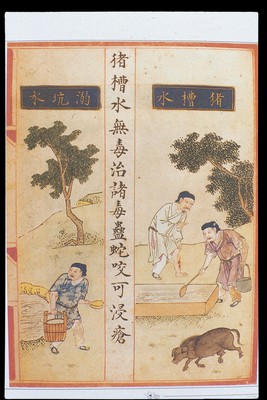 Image: Wellcome Collection, Public Domain
This historical text from the Ming dynasty describes the medicinal use of water collected from urine ditches. It suggests this substance can be used to treat diabetes and to neutralize toxins from puffer fish.
See it at the library ↗
📖 Chinese Materia Medica illustration, Ming: Cluster mallow (Wellcome Collection) · history
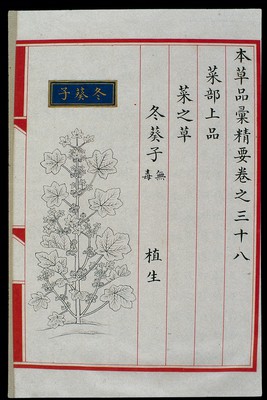 Image: Wellcome Collection, Public Domain
This historical text describes the medicinal properties of Cluster mallow (Malva verticillata L.). It notes that the seeds are used in traditional medicine to promote urination, assist lactation, and drain pus.
See it at the library ↗
📖 Medical miscellany in Italian and Latin (Miscellanea Medica XXV). (Wellcome Collection) · history
 Image: Wellcome Collection, Public Domain
This manuscript collection includes various historical medical receipts and texts. It concludes with a section on the distillation of urine, reflecting historical practices where urine was processed for medicinal or alchemical purposes.
See it at the library ↗
📖 Ming herbal (painting): Stork (Wellcome Collection) · history
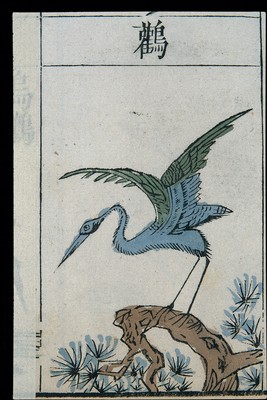 Image: Wellcome Collection, Public Domain
This historical Chinese herbal text describes the medicinal properties of various animal products. It explicitly states that the urine of the stork can be used to treat infantile convulsions.
See it at the library ↗
📖 St Pancras Wells, King's Cross, London: aerial view showing the "Plantation", and St Pancras church in the background, with an advertisement and explanation. Engraving. (Wellcome Collection) · history
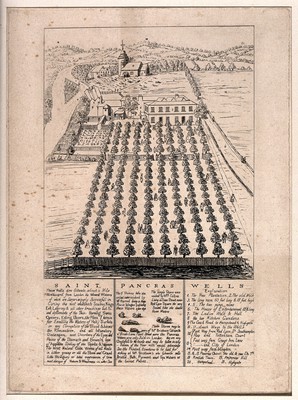 Image: Wellcome Collection, Public Domain
This historical engraving depicts St Pancras Wells, an 18th-century site associated with various medical treatments. The subjects listed in the record include the historical use of urine for the treatment of infections.
See it at the library ↗
📖 Japanese/Chinese woodcut: Infectious 'red-eye' (chiyan) (Wellcome Collection) · history
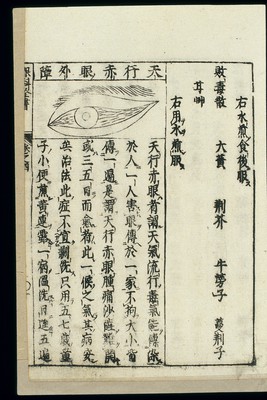 Image: Wellcome Collection, Public Domain
This historical medical text describes the treatment of infectious conjunctivitis ('red-eye'). It recommends washing the eyes with a warm decoction of Golden Thread and child's urine to remove toxic poisons.
See it at the library ↗
📖 Regeneración vesical: Células, Andamiajes y Biorreactores (Europeana (Repository of the Catholic University of Valencia San Vicente Mártir)) · review
This paper reviews the state of the art in bladder regeneration, focusing on tissue engineering strategies to replace damaged or removed bladders. It discusses the use of cells, scaffolds, and bioreactors as fundamental components in advanced therapies for bladder regeneration.
See it at the library ↗
📖 Recipe Book, 18th and 19th Century. (Wellcome Collection) · history
 Image: Wellcome Collection, Public Domain
This 18th and 19th-century manuscript contains a collection of Irish medical and household recipes for treating various ailments. It documents historical folk medicine practices, which frequently included the therapeutic use of animal and human urine for conditions like rheumatism and skin complaints.
See it at the library ↗
📖 Compendium of medical and surgical texts (Miscellanea Medica XXIV) (Wellcome Collection) · history
 Image: Wellcome Collection, Public Domain
This medieval compendium contains various medical and surgical texts, including treatments for head pain, pestilence, and surgical procedures like the administration of a clyster for fistula. It provides a collection of miscellaneous medical receipts and practical medicinal instructions from the period.
See it at the library ↗
📖 An old man walks with the aid of a stick and a visor to protect his eyes, printed text providing advice on eye illness and remedies. (original title: An old man walks with the aid of a stick and a visor to protect his eyes, printed text providing advice on eye illness and remedies. Coloured line engraving by Rainaud after F.A. Laguillermle.) (Wellcome Collection) · history
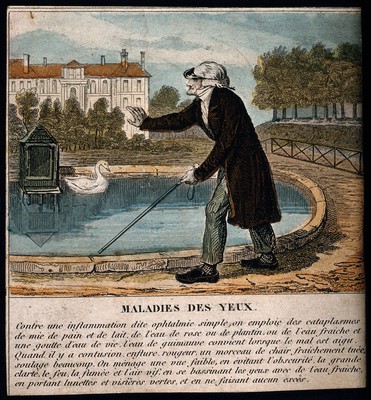 Image: Wellcome Collection, Public Domain
This historical print provides advice and remedies for eye illnesses and infections. Traditional first aid and ocular treatments in this era frequently recommended the use of fresh urine as a wash for treating eye infections and inflammation.
See it at the library ↗
📖 Bald's Leechbook (Europeana (The British Library)) · history
 Image: British Library via Europeana, Public Domain
This historical medical manuscript contains Anglo-Saxon medical recipes and therapeutic practices, some of which involve the use of bodily fluids such as human urine for treating various ailments.
See it at the library ↗
📖 Takhmīs al-qaṣīdat li-Shaykh al-Faqīh Sharīf Sayid 'Abd al-Faḍl al-Naḥwiy: Praise (Europeana (The British Library)) · history
This historical text provides instructions on how to heal impotence using traditional medicine.
See it at the library ↗
🐇 Down the Rabbit Hole: the studies →
📜 The Big Move: the patents →
More manuscripts are being added.
Do you practise Shivambu? Be counted in the global census KnowledgeImage: Wellcome Collection, Public Domain
Vicary was the royal surgeon of England. Popular histories say he recommended washing soldiers' battle wounds with urine; his books are kept and digitized by the Wellcome Collection (London), so the original wording can be checked there.
The anatomie of the bodie of man, Thomas Vicary (Wellcome Collection) ↗
The English-mans treasure, Thomas Vicary (Wellcome Collection) ↗
📖 World War I (Ypres, 1915)
When chlorine gas was first used, soldiers were told to breathe through cloth soaked in urine until gas masks arrived; the ammonia in urine was thought to neutralize the chlorine. This is widely reported in histories of the war.
📖 Armies and sailors without water, recorded by John G. Bourke (1891)
In his huge survey of urine customs, the US Army officer and ethnologist Bourke gathers cases from old chronicles: the army of Crusaders under Peter the Hermit, besieged by the Muslims at Nicomedia (1096), "compelled to drink their own urine"; shipwrecked English seamen who "drank human urine for want of water"; and in 1877 Captain Nicholas Nolan of the US Tenth Cavalry, lost on the Staked Plains of Texas, whose troop lived for several days on the blood of their horses and their own urine. He also cites a labourer buried under a fall of earth in 1522 who nourished himself for seven days on his own urine.
Bourke, Scatalogic Rites of All Nations, 1891 (free, Internet Archive) ↗
↑ Back to contents
━━━━━━━━━━━━━━━━━━━━━━━━━━━━
🏺 ANCIENT MESOPOTAMIA: ASSYRIAN CLAY TABLETS
━━━━━━━━━━━━━━━━━━━━━━━━━━━━
📖 Assyrian medical tablets from Nineveh (7th century BC), British Museum: BAM 520 and BM 123362
Tablet BAM 520 (K 9503+), Nineveh. Photo © The Trustees of the British Museum, via CDLI
About a thousand medical clay tablets survive from Babylon and Assyria, most of them from the library of King Ashurbanipal at Nineveh. On two of them, which repeat the same prescription, human urine (šīnāt amēlūti, written KÀŠ a-me-lu-ti in cuneiform) is part of a remedy for a man with a persistent fever who groans and sweats: malt water and human urine are heated in a tannour oven with cedar, juniper and a tree cone, the mixture is kept soaking, and acacia is added; the rest of the line is broken off. The tablets were translated by Markham J. Geller and Strahil V. Panayotov in an open-access edition (De Gruyter, 2020). The Dutch Assyriologist Marten Stol also lists human urine among the drugs of Mesopotamian medicine (1993).
Read the translation (Geller & Panayotov 2020, open access) ↗
Read the tablet line by line in English (Oracc, NinMed project) ↗
↑ Back to contents
━━━━━━━━━━━━━━━━━━━━━━━━━━━━
🏛️ ANCIENT GREECE AND ROME
━━━━━━━━━━━━━━━━━━━━━━━━━━━━
📖 Dioscorides, De materia medica (1st century AD)
The Greek physician Dioscorides wrote the most important book of medicines of the ancient world, used for some 1,500 years. Its second book, on medicines from animals and living creatures, includes human urine (ouron). A copy made in Constantinople in the mid-10th century, now at the Morgan Library in New York, even pictures it as a vial of urine.
Dioscorides, De materia medica, Constantinople copy, page with human urine (Morgan Library) ↗
📖 Galen (2nd century AD)
The great Greek physician of Rome once advised a patient to urinate on his wounds. He found it disgusting and would not prescribe it to his "urban and famous" patients, but he knew it to be an effective remedy.
Galen and Dioscorides (Explore Galen) ↗
📖 Pliny the Elder, Natural History, Book 28, Chapter 18: "Remedies derived from the urine" (Rome, 1st century AD)
The great Roman encyclopedia lists urine remedies: children's urine for eye complaints, burns and ear infections; stale urine for running ulcers, sores, burns, chapped skin and scorpion stings; midwives, he writes, found no lotion that removes itching more effectually. And he states plainly: "every person's own urine is the best for his own case", applied immediately and unmixed, for example on a dog bite or a hedgehog quill in the flesh.
Pliny, Natural History, vol. 5 (Bostock & Riley translation, free on Project Gutenberg) ↗
↑ Back to contents
━━━━━━━━━━━━━━━━━━━━━━━━━━━━
⚜️ FRANCE
━━━━━━━━━━━━━━━━━━━━━━━━━━━━
📖 Pierre Fauchard, Le Chirurgien Dentiste (Paris, 1728)
The "father of modern dentistry" advised rinsing the mouth every morning and evening with a few spoonfuls of one's own urine, just after it has been passed, admitting it is not very pleasant "except inasmuch as it brings distinct relief". He used it for toothache and early tooth decay.
Pierre Fauchard, father of modern dentistry (Encyclopedia.com) ↗
📖 "Essence of urine" at the court of Louis XIV (1670s–1680s)
In 1671 the chemist Matte la Faveur collected about sixty pints of urine from little children to make a volatile salt from it, sold to the rich. In 1685 the famous letter-writer Madame de Sévigné told her daughter that she took "eight drops of essence of urine" for her "vapours".
A history of urine: Boyle, Willis, Madame de Sévigné (Stephen Liddell) ↗
📖 Noël Chomel, Dictionnaire Oeconomique (1709)
One of the most popular household books of 18th-century France, reprinted for 70 years in several languages, gives remedies made with the urine of a male child.
Noël Chomel's remedies, Dictionnaire Oeconomique (Alpha History) ↗
📖 Brittany (19th century)
In 1888 the French naval captain Henri Jouan wrote that in his home region the urine of a healthy young man was used to wash the breasts of a woman who had just given birth.
1847: wash maternal bosoms in a young man's urine (Alpha History) ↗
↑ Back to contents
━━━━━━━━━━━━━━━━━━━━━━━━━━━━
🇬🇧 ENGLAND: THE FATHERS OF SCIENCE
━━━━━━━━━━━━━━━━━━━━━━━━━━━━
📖 Robert Boyle and Thomas Willis (17th century)
Robert Boyle, called the father of chemistry, advised certain patients to drink every morning "a moderate draught of their own urine", while still warm. Thomas Willis, then the richest doctor in England, told a young lady to drink her own warm urine against "extreme sourness" in her throat.
A history of urine: Boyle, Willis, Madame de Sévigné (Stephen Liddell) ↗
↑ Back to contents
━━━━━━━━━━━━━━━━━━━━━━━━━━━━
📚 BOURKE'S SURVEY OF URINE IN MEDICINE (1891)
━━━━━━━━━━━━━━━━━━━━━━━━━━━━
📖 John G. Bourke, Scatalogic Rites of All Nations (Washington, 1891), chapter "Ordure and Urine in Medicine"
Bourke, a US Army captain and ethnologist, compiled urine remedies from about a thousand authorities, from Dioscorides, Galen and Avicenna to European folk medicine. Among them, from Daniel Beckherius' Medicus Microcosmus (London, 1660): a drink of one's own urine taken while fasting for obstructions of the liver and spleen, dropsy and jaundice, drunk every morning for some time; one's own urine as a lotion for palsy; bathing the feet in one's own urine for gout and for travel sores; urine as a lotion for wounds, bruises and ulcers; and one's own urine drunk as a protection from the plague, which Beckherius says he knew "of his own knowledge" had been used "with wonderful success between 1620 and 1630".
Bourke, Scatalogic Rites of All Nations, 1891 (free, Internet Archive) ↗
↑ Back to contents
━━━━━━━━━━━━━━━━━━━━━━━━━━━━
🌿 HOMEOPATHY: URINUM
━━━━━━━━━━━━━━━━━━━━━━━━━━━━
📖 John Henry Clarke, A Dictionary of Practical Materia Medica, vol. II (London, 1902), pages 1480–1481
Page 1480 of Clarke (1902), public domain, scan: Google Books via Internet Archive
The classic reference book of homeopathy lists Urinum, a remedy made from urine, for acne, boils, dropsy, eye inflammation and scurvy, and opens: "Urinotherapy is practically as old as man himself." Clarke gathers cases reported in the British Medical Journal of 1900 and by other doctors: a youth cured of boils that nothing else could remedy by drinking a cupful of his own urine on the mornings of a nine-day course; blackheads cured the same way; chronic bronchitis much relieved; ague in the Lincolnshire fens; nettle rash; children's eye inflammation treated in Switzerland by bathing the eyes in their own urine; croup. He notes that the Chinese treat wounds by sprinkling urine on them.
Clarke, A Dictionary of Practical Materia Medica, vol. II, 1902 (free, Internet Archive) ↗
📖 Scurvy cured in Andersonville prison (American Civil War, 1860s)
From the same entry: in the Confederate prison at Andersonville, starving prisoners were dying by the hundreds of scurvy. One of them, Mr. T., whose legs were so contracted he could only move on his elbows, told how they let their urine stand until it began to sour, then took "a good swallow" four or five times a day. The treatment cured him and all the companions who adopted it.
Clarke, A Dictionary of Practical Materia Medica, vol. II, 1902 (free, Internet Archive) ↗
↑ Back to contents
━━━━━━━━━━━━━━━━━━━━━━━━━━━━
🌙 ARABIC MEDICINE
━━━━━━━━━━━━━━━━━━━━━━━━━━━━
📖 Dawud al-Antaki, Tadhkira (16th century)
One of the best-known books of Arabic medicine. Writing about urine as a medicine, al-Antaki ranks human urine first: "The most effective types are human urine then the camel's."
Al-Antaki on urine, quoted in a study of the camel milk and urine hadiths (Bismika Allahuma) ↗
↑ Back to contents
━━━━━━━━━━━━━━━━━━━━━━━━━━━━
🏔️ TIBET: URINE IN THE MONASTERY TRADITION
━━━━━━━━━━━━━━━━━━━━━━━━━━━━
Most of Tibet's old books were destroyed or scattered during China's Cultural Revolution (1960s–70s), but copies survived: the Buddhist Digital Resource Center, founded by the scholar Gene Smith, has digitized over 27 million pages of Tibetan and Buddhist texts, medicine included, free to read online.
Buddhist Digital Resource Center (free digital library) ↗
📖 Urine among the "five nectars"
In Tibetan Buddhist tantra, urine is counted among the five ambrosias (pañcāmṛta), the sacred "nectars". This is the tradition behind the healing "mani pills", consecrated in long tantric rituals, prepared every year under the Dalai Lama and given out free to Tibetan Buddhists worldwide. (The study does not say whether today's pills contain urine.)
Study of the Tibetan mani pills (Asian Studies Review) ↗
↑ Back to contents
━━━━━━━━━━━━━━━━━━━━━━━━━━━━
📜 THE TALMUD AND JEWISH FOLK MEDICINE
━━━━━━━━━━━━━━━━━━━━━━━━━━━━
📖 Babylonian Talmud, Shabbat 109b (around 500 AD)
Among the remedies the rabbis discuss, Rabbi Chanina says that a person stung by a wasp should drink a small cup of urine that is forty days old (another reading: the urine of a forty-day-old baby).
Shabbat 109b, summary of the page (Dafyomi Advancement Forum) ↗
📖 Urine in later Jewish medicine
Jewish folk remedies kept using urine as a medicine: Rabbi Yudel Rosenberg (1859–1935) gave it as a treatment for swelling in a book printed in Piotrków in 1911, and rabbinic writers of the plague years advised drinking the urine of a young healthy boy each morning.
On the uses of urine in Jewish tradition (Talmudology, Dr. Jeremy Brown) ↗
↑ Back to contents
━━━━━━━━━━━━━━━━━━━━━━━━━━━━
⚗️ ALCHEMY AND THE ROSICRUCIANS
━━━━━━━━━━━━━━━━━━━━━━━━━━━━
Alchemist-physicians made medicines from urine. Their ideas later flowed into Rosicrucian and Masonic circles: a Masonic encyclopedia notes that much of alchemy was taken into Freemasonry in the eighteenth century.
📖 Testamentum Fraternitatis Roseae et Aureae Crucis (Testament of the Brotherhood of the Golden Rose Cross)
A Rosicrucian alchemical text about making medicine. It teaches that the "stone" and the alkahest (universal solvent) can be prepared from urine by a person who lives chastely and purely, and gives the distilling steps, calling the salt obtained "sal sapientiae", the salt of wisdom.
Testamentum Fraternitatis Roseae et Aureae Crucis, English translation ↗
↑ Back to contents
━━━━━━━━━━━━━━━━━━━━━━━━━━━━
🌲 RUSSIA AND SIBERIA: VILLAGE MEDICINE
━━━━━━━━━━━━━━━━━━━━━━━━━━━━
📖 Pyotr A. Gorodtsov, "Urine (Urina) in folk medicine" (typescript, village of Artamonovka, Tyumen district, Siberia, August 1908; dated 1915 in the library record)
First page of the typescript (1908). Scan: Internet Archive
The Siberian ethnographer Gorodtsov (1865–1919) recorded how peasants in his district healed with urine. Wounds, grazes, bruises, swellings from blows, and even broken and crushed bones, he writes, "are almost always treated with urine" in peasant life: the place is washed with warm, fresh urine and wrapped in combed hemp soaked in urine, changed three or four times a day so it never dries. He saw it himself: a 17-year-old village lad whose hand was crushed and forearm broken in a windmill was treated with urine alone, with a good result, though the hand stayed deformed. Eye problems were washed with urine and bandaged with urine-soaked hemp, which he says soothes the pain. Wounds of farm animals were treated with human urine, not animal urine. Taken by mouth, urine was the villagers' standard remedy for alcohol poisoning. He also quotes Herodotus: an Egyptian pharaoh blind for ten years was told by the oracle he would see again by washing his eyes with a faithful woman's urine. The typescript is scanned and free to read (in Russian).
Read Gorodtsov's typescript (Internet Archive, Russian) ↗
↑ Back to contents
━━━━━━━━━━━━━━━━━━━━━━━━━━━━
🇮🇳 INDIA: SVAMUTRA BOOKS OF THE GANDHIAN MOVEMENT
━━━━━━━━━━━━━━━━━━━━━━━━━━━━
📖 Raojibhai Manibhai Patel, "Arogya ka Amulya Sadhan: Shivambu – Svamutra" ("A priceless means to health", Hindi; first published 1961, this scan is the 10th edition, November 1983)
Cover (10th edition, 1983). Scan: Internet Archive
Raojibhai Patel, a co-worker of Mahatma Gandhi, wrote "Manav Mutra" ("Human urine"), one of the most widely read Indian books on urine therapy; this is its Hindi edition, published by Bharat Sevak Samaj. It opens with forewords by Morarji Desai, later Prime Minister of India, the Gandhian writer Kaka Kalelkar and Dr. Jivraj N. Mehta, a physician and the first Chief Minister of Gujarat. Part one explains the idea and the tradition, East and West, and the methods: massage with urine, drinking it, fasting on urine and water, urine packs, and combining it with other natural treatments, with a chapter on dangers and warnings. Part two is the case histories Patel collected, chapter by chapter: last-stage tuberculosis of the lungs and bones, gangrene, tumours and cancer, heart asthma, weak heart, high and low blood pressure, malaria and other fevers, coughs and whooping cough, menstrual pain, kidney swelling, jaundice, cataract, wounds and burns. Part three gathers readers' own experiences.
Read the book (Internet Archive, Hindi) ↗
📖 Chandrikaprasad Mishra 'Shastri', "Svamutra Chikitsa" ("Own-urine treatment"), parts 1 and 2 (Hindi, Varanasi; 3rd revised edition, December 1983, 9,000 copies printed)
Cover (Sarva Seva Sangh, 1983). Scan: Internet Archive
Published by Sarva Seva Sangh, the publishing house of the Gandhian movement. The author writes that the prison hardships he suffered in India's fight for independence left him with illnesses no one could cure: for 40 years he tried Ayurveda, Unani, allopathy, homeopathy, naturopathy, hydrotherapy and village herbs, spending a fortune, with daily injections and only passing relief, until own-urine treatment brought a lasting result. When people around him saw it, others tried it too. Part one covers the history of urine therapy, why to use it, the traditional evidence, the methods, and the Shivambu Kalpa; part two covers what urine is made of, its power against poisons, why it is treated as untouchable, the different ways of using it, and own urine for children's and women's illnesses, with a list of sources. He dedicates the book to Shiva, "who created the Shivambu Kalpa".
See the book (Internet Archive) ↗
↑ Back to contents
━━━━━━━━━━━━━━━━━━━━━━━━━━━━
🕰️ 1500S (11)
━━━━━━━━━━━━━━━━━━━━━━━━━━━━
📖 Regimen of Health in French: Rule Against Leprosy, Treatise for Knowledge of Urine, Handy Remedies for the Great Pox by Arnau de Vilanova (original title: Regimen sanitatis en françoys: ruler gives against lepydim ie (sic), traictie for cognoistrum the urine, handy remits for the big verole/by Arnau de Vilanova) (Europeana (National Library of France), 1514) · history
This 1514 health regimen by Arnau de Vilanova includes a treatise on urine knowledge and practical remedies for syphilis, reflecting historical medical use of urine for therapeutic purposes.
See it at the library ↗
📖 The secretes of the reuerende Maister Alexis of Piemount : Containyng excellent remedies against diuers diseases, woundes, and other accidents... (original title: The secretes of the reuerende Maister Alexis of Piemount : Containyng excellent remedies against diuers diseases, woundes, and other accidents, with the manner to make distillations, parfumes, confitures, diynges, colours, fusions and meltynges. ... Translated out of Frenche into Englishe, by Wyllyam Warde.) (Wellcome Collection, 1558) · history
This 1558 English translation of Girolamo Ruscelli's work details numerous medicinal formulas and 'secrets' for treating wounds and illnesses. The text includes historical recipes where human urine was distilled or applied as a therapeutic agent. It represents a significant record of Renaissance-era medical and chemical knowledge.
See it at the library ↗
📖 Secretes. Or soueraigne receipts well experimented and tryed (original title: Secretes. Or soueraigne receipts well experimented and tryed / by diuerse authours contaynynge notable remedies agaynste diuers sicknesses and diseases, wounds, and other accidents, with the maner to make distillations, parfumes, dyings, colours, and meltings: with many other artificiall sciences, very profitable for euery man.) (Wellcome Collection, 1562) · history
This collection of 'sovereign receipts' contains various remedies for sicknesses, diseases, and wounds based on the works of Alessio Piemontese. These early modern pharmacological recipes frequently utilized human urine as a key ingredient in distillations and topical treatments.
See it at the library ↗
📖 The secretes of the reverend Maister Alexis of Piemont [pseud.? i. e. Girolamo Ruscelli?] Containing excellent remedies against divers diseases, woundes, and other accidentes, with the manner to make distillations, parfumes, confitures, dyinges, colours, fusions, and meltinges. (original title: The secretes of the reverend Maister Alexis of Piemont [pseud.? i. e. Girolamo Ruscelli?] Containing excellent remedies against divers diseases, woundes, and other accidentes, with the manner to make distillations, parfumes, confitures, dyinges, colours, fusions, and meltinges. A worke well approved, verye profitable and necessarie for everye man. Newely corrected and amended, and also somewhat enlarged in certaine places, whiche wanted in the fyrst edition / Translated oute of Frenche into Englyshe, by William Warde.) (Wellcome Collection, 1562) · history
Image: Wellcome Collection, Public Domain
This historical medical text by Girolamo Ruscelli includes various traditional remedies and distillations for treating wounds and diseases. It documents the early modern use of substances like human urine in medicinal preparations and chemical processes. The work serves as a primary record of 16th-century pharmacopeia and therapeutic practices.
See it at the library ↗
📖 The secretes of the reuerend Maister Alexis of Piemont : Containing excellent remedies against diuers diseases, woundes, and other accidentes... (original title: The secretes of the reuerend Maister Alexis of Piemont : Containing excellent remedies against diuers diseases, woundes, and other accidentes, with the maner to make distillations, parfumes, consitures, dyinges, colours, fussions, and meltinges. A worke well approued, verye profitable and necessarie for euerye man. Newely corrected and amended, and also somewhat enlarged in certaine places, whiche wanted in the fyrst edition. Translated oute of Frenche into Englyshe, by William Warde.) (Wellcome Collection, 1562) · history
This 1562 edition of the 'Secrets' contains a wide array of pharmaceutical recipes and chemical instructions for treating wounds and diseases. It records the historical medicinal use of human urine in distillations and as a component in complex remedies. The work reflects the standard therapeutic practices and materia medica of the late Renaissance.
See it at the library ↗
📖 The secretes of the reuerende Maister Alexis of Piemount : contayning excellent remedies agaynste diuers dyseases, woundes, and other accidentes... (original title: The secretes of the reuerende Maister Alexis of Piemount : contayning excellent remedies agaynste diuers dyseases, woundes, and other accidentes, with the maner to make dystillations, parfumes, confitures, dyings, colours, fusions, and meltings. ... Translated out of French into Englishe, by William Warde.) (Wellcome Collection, 1568) · history
This 1568 edition of the 'Secrets' provides a collection of early modern medical recipes and distillation techniques for health and healing. It documents the historical use of human urine in various pharmaceutical preparations intended to treat diverse diseases and accidents. The work was a widely used reference for domestic and professional medicine in the 16th century.
See it at the library ↗
📖 The Breviarie of health, wherein doth folow, remedies, for all manner of sicknesses and diseases, the which may be in man or woman. (original title: The Breviarie of health, wherein doth folow, remedies, for all manner of sicknesses and diseases, the which may be in man or woman. Expressing the obscure termes of Greke, Araby, Latin, Barbary, and English concerning phisick and chirurgerie / compyled by Andrew Boorde.) (Wellcome Collection, 1575) · history
Image: Wellcome Collection, Public Domain
This historical medical text by Andrew Boorde provides remedies for various human diseases and sicknesses. It includes traditional medical practices from the 16th century, which historically included the internal and external use of urine for therapeutic purposes.
See it at the library ↗
📖 The Secretes of the reuerend Maister Alexis of Piemont : containyng excellente remedies against diuerse diseases, woundes, and other accidentes... (original title: The Secretes of the reuerend Maister Alexis of Piemont : containyng excellente remedies against diuerse diseases, woundes, and other accidentes, with the maner to make distillations, parfumes, confitures, diynges, colours, fusions, and meltynges. ... Translated out of Frenche into Englishe, by Willyam Warde.) (Wellcome Collection, 1580) · history
This 1580 corrected edition outlines traditional remedies and chemical procedures for creating medicines to treat various human ailments. It includes historical instructions for using urine in distillations and topical applications for its supposed therapeutic benefits. The text is a key historical source for understanding the medicinal use of bodily fluids in the 16th century.
See it at the library ↗
📖 A briefe treatise, called Caries farewell to physicke : wherein thou shalt find rare and speciall helpe for manie common diseases : herevnto also is to be referred a gentle remedie against the collicke, named The hammer for the stone (original title: A briefe treatise, called Caries farewell to physicke : wherein thou shalt find rare and speciall helpe for manie common diseases : herevnto also is to be referred a gentle remedie against the collicke, named The hammer for the stone / by the same W.C.) (Wellcome Collection, 1583) · history
This 16th-century medical work describes specific remedies for common ailments, including a specialized treatment for kidney and bladder stones. Historical treatments for 'the stone' in this era frequently involved the internal and external application of urine-based preparations. The treatise documents early modern approaches to urological health and materia medica.
See it at the library ↗
📖 The breviarie of health: vvherin doth folow, remedies for all maner of sicknesses & diseases, the which may be in man or woman. (original title: The breviarie of health: vvherin doth folow, remedies for all maner of sicknesses & diseases, the which may be in man or woman. Expressing the obscure termes of Greke, Araby, Latin, Barbary, and English, concerning phisick and chirurgerie. Compyled by Andrew Boord, doctor of phisicke: an English-man. Now newly corrected and amended, with some approued medicines that neuer were in print before this impression, & are aptly placed in their proper chapters, by men skilfull in phisicke and chirurgerie.) (Wellcome Collection, 1587) · history
This 1587 edition of Boorde's medical compendium includes approved medicines for various diseases and surgical conditions. It serves as a record of the therapeutic application of urine and other substances in 16th-century clinical practice.
See it at the library ↗
📖 The English mans treasure : with the true anatomie of mans bodie: compiled by that excellent chirurgion maister Thomas Vicary Esquier... (original title: The English mans treasure : with the true anatomie of mans bodie: compiled by that excellent chirurgion maister Thomas Vicary Esquier, Sergeant Chirurgion to King Henry the 8. To King Edward the 6. To Queene Mary. And to our soueraigne lady Queene Elizabeth. And also chiefe chirurgion to Saint Bartholmewes Hospitall. Whereunto are annexed many secretes appertaining to chirurgerie, with diuers excellent approued remedies for all diseases the which are in man or woman, with emplasters of speciall cure, with other potions and drinkes approued in phisicke. Also the rare treasure of the English bathes: written by William Turner, doctor in phisicke. Gathered and set forth for the benefit of his friends and country-men in England by VVilliam Bremer practitioner in phisicke and chirurgerie.) (Wellcome Collection, 1596) · history
This historical surgical treatise provides a collection of approved remedies, potions, and plasters used for treating various human diseases in the 16th century. It includes traditional medical secrets and pharmaceutical recipes that historically utilized human urine for its perceived healing properties. The text reflects the clinical practices of prominent surgeons during the Tudor period.
See it at the library ↗
↑ Back to contents
━━━━━━━━━━━━━━━━━━━━━━━━━━━━
🕰️ 1600S (8)
━━━━━━━━━━━━━━━━━━━━━━━━━━━━
📖 Book of remedies and medicine (original title: Lhyfr o fedheginiaeth a physygwriaeth [Book of remedies and medicine].) (Wellcome Collection, 1600) · history
Image: Wellcome Collection, Public Domain
This 17th-century Welsh manuscript serves as a comprehensive book of medicine and remedies for various physical ailments. It includes specific treatments for swelling in the feet or legs caused by bruising, as well as various purgative drinks and medicinal receipts.
See it at the library ↗
📖 Agriculture and Medicine: Columella and Palladius on Farming and a Memorable Report on Urine for Curing Diseases (original title: Agricultur, Oder Ackerbaw. The beyden high experience and famous Roman. L. Columellae & Palladii: Worinnen Outside is traded by allerley Feldtbaw, on cereal, wine, and L. allerley fruits and herbs. Item: Von allerley ObstBäwmen und Garten Werck, Also Plants and Impefs... Behold a useful and beautiful report, against every Thiers wreath... Item: How to complain to Allerley Leibes, Inner and Euserlich from the chief bite to the foot Curiren sol, Beneben an alternative report of Praeservirung, and Cur der Pest, by... Pedemontanum vormahls in Welscher Peciret... except Latin language, auff’s newe fleshly diluted and clarified Also with new additions and memorable report of the urine, and Sexti Platonicis Artzneybuch, of birds, savages and zamen ThPevermehret) (Europeana (Bavarian State Library), 1612) · history
This 1612 historical text includes a section on the therapeutic use of urine for treating various internal and external ailments. It presents a 'memorable report on urine' alongside medical recipes for curing diseases from head to foot. The work reflects early modern European practices of urine therapy.
See it at the library ↗
📖 Iohann-Pharam. Rhumelii. Opuscula chymico-magico-medica (original title: Iohann-Pharam. Rhumelii. Opuscula chymico-magico-medica : darinnen allerley Artzneyen, wider in[n]erliche und äusserliche Gebrechen der Weiber: Unterricht allerley Brüch und Fürfäll an Männern und Weibern, ohne Schnidt und Schmertzen zuheilen: die versehrte Blasen, und die den Urin nicht halten können, zu curiren: auch das Podagra magneticè zu vertreiben. Item Panacea Aurea, oder gründliche Beschreibung dess Auri Potabilis: aller Balsam, sampt ihrem Brauch: aller warmen Bäder, wie auch Basilica Chymica, und spagyrisches Hauss- und Reise- Apotecklein, mit angehengter Kriegs Artzney, und gantz newen und nützlichen Hebammenkunst.) (Wellcome Collection, 1635) · history
This 1635 medical compendium includes historical treatments for various ailments, specifically mentioning methods to cure bladder issues and incontinence. It documents early spagyric and medicinal approaches to treating urinary system dysfunction.
See it at the library ↗
📖 The unlearned alchymist his antidote: or, a more full and ample explanation of the use, virtue and benefit of my pill, entituled, An effectual diaphoretick, diuretic, purgeth by sweating, urine. Whereunto is added, sundry cures and experiences, with particular direction unto particular diseases and distempers. Also, sundry plain and easie receits. Which the ingenuous may prepare for their own health (original title: The unlearned alchymist his antidote: or, a more full and ample explanation of the use, virtue and benefit of my pill, entituled, An effectual diaphoretick, diuretic, purgeth by sweating, urine. Whereunto is added, sundry cures and experiences, with particular direction unto particular diseases and distempers. Also, sundry plain and easie receits. Which the ingenuous may prepare for their own health / by Richard Mathew ; and are to be had at his house by the Lyons Den at the Tower, next gate to the By-Ward.) (Wellcome Collection, 1662) · history
This historical text describes the use of a medicinal pill intended to act as a diuretic to purge the body through the promotion of urine. It provides instructions and claims regarding the use of this preparation for treating various diseases and distempers.
See it at the library ↗
📖 An appendix to The unlearned alchimist : wherein is contained the true receipt of that excellent diaphoretick and diuretick pill, purging by sweat and urine (original title: An appendix to The unlearned alchimist : wherein is contained the true receipt of that excellent diaphoretick and diuretick pill, purging by sweat and urine, commonly known by the name of Matthew's pill : with the exact manner of preparing and making of it, and the particular nature and virtue of the several ingredients, as also of the pill / by G. Kendall.) (Wellcome Collection, 1664) · history
This 1664 text describes the preparation and medicinal virtues of 'Matthew's pill,' a diaphoretic and diuretic agent. The text discusses the pill's function in promoting the excretion of sweat and urine as a therapeutic method for health.
See it at the library ↗
📖 PHARMACOPOEA SPAGYRICA, Or EXACT DESCRIPTION, In what way useful, effective, and penetrating medicines can be made and prepared from Vegetables, Animals & Minerals, in a way not commonly used and easier (original title: PHARMACOPOEA SPAGYRICA, Sive EXACTA DESCRIPTIO, Qua ratione ex Vegetabilibus, Animalibus & Mineralibus, modo haud usitato faciliorique, utilia, efficacia, & penetrantia medicamenta fieri praeparariwue possint :) (Europeana (National Library of the Czech Republic), 1664) · history
This 17th-century pharmacopoeia describes spagyric methods for preparing medicines from various sources, including animal substances. Historical texts of this nature often included urine as a component in alchemical and traditional medicinal preparations.
See it at the library ↗
📖 De urinis libri VII. Accedunt huic editione aliorum medicorum dissertationes de urinis. Quorum nomina versa pagina indicat / [Joannes]. (Wellcome Collection, 1670) · history
Image: Wellcome Collection, Public Domain
This collection of medical dissertations from the 17th century includes works by Jodocus Willich and others that discuss the examination of urine and list various remedies derived from it. It documents historical medical perspectives on the therapeutic application of urine.
See it at the library ↗
📖 The sick-mans rare jewel (original title: The sick-mans rare jewel : wherein is discovered a speedy way how every man may recover lost health, and prolong life, how he may know what disease he hath, and how he himself may apply proper remedies to every disease, with the description, definition, signs and syptoms [sic] of those diseases. (Viz.) The scurvy, leues venerea, gonorrhea, dropsies, catarrhs, chollick, gouts, madness, frensies of all sorts, fever, jaundise, consumptions, ptisick, swoundings, histerick passions, pleurisies, cachexia's, worms, vapours, hypochondriack melancholly, stone, strangury, with the whole troop of diseases most afflicting the bodies of men, women and children; with a supply of suitable medicines; ... a piece profitable for every person and family, and all that travel by sea or land. By B.A.) (Wellcome Collection, 1674) · history
This historical medical text describes early modern remedies and therapeutic methods, including the use of urine, for various human diseases and ailments. It outlines how individuals could apply these preparations to recover health and prolong life.
See it at the library ↗
↑ Back to contents
━━━━━━━━━━━━━━━━━━━━━━━━━━━━
🕰️ 1700S (6)
━━━━━━━━━━━━━━━━━━━━━━━━━━━━
📖 The third edition of the Vanities of philosophy and physick (original title: The third edition of the Vanities of philosophy and physick enlarg'd to more than double the number of sheets; convenient to be perused by divines, and students in any faculty; but more necessarily by Physicians, and chiefly by all that would preserve Health, and prolong Life, as well in a Regular as Irregular way of Living: by Directions and Medicines herein mentioned, and easily prepar'd by any of the least Skill: there is also now added, a third medicine, without which the design of this treatise woul be imperfect. Offering moreover At different Hypotheses in Metaphysicks, Natural, and Moral Philosophy; also in the Art of Physick, almost throughout the whole Body, and particularly relating to Indigestion, & other Diseases of the Stomach, Fevers, Consumptions, Stone, Gravel, Suppression of Urine, Apoplexy, Palsie, Madness, Diseases of the Eyes, and others: With variety of Medicines and Rules, whereby to make particular Choice out of them. By Gideon Harvey, M.D.) (Wellcome Collection, 1702) · history
This 1702 medical text discusses various health preservation methods and medicines, including historical practices involving the use of urine for treating conditions like suppression of urine and other ailments. It serves as a historical record of early modern medical beliefs regarding the therapeutic application of bodily fluids.
See it at the library ↗
📖 Eröffnetes chymisches Laboratorium (original title: Eröffnetes chymisches Laboratorium : worinnen die vornehmsten wenig befandte medicamenta, insonderheit die Cur der Sympathie, welche vermittelst des Urins bisshero practiciret und verborgen gehalten worden ... Imgleichen einige geheime Sachen und Original-Briefe eines Adepti von der Transmutation der Metallen und Verbesserung der Diamanten ... Und einer Methode, wit man sich selbst von der so gemeinen Galanterie-Seuche praeserviren und curiren könne ... / von H.C. Haccius.) (Wellcome Collection, 1716) · history
This 18th-century alchemical text discusses various medicinal preparations. It specifically describes the use of urine in the practice of 'sympathetic' medicine and other hidden therapeutic methods of the time.
See it at the library ↗
📖 Remedes choisis et éprouvés, tant de médecine, que de chyrurgie. ... Suite du Tableau des maladies de Lommius (original title: Remedes choisis et éprouvés, tant de médecine, que de chyrurgie. ... Suite du Tableau des maladies de Lommius / [Charles Le Breton].) (Wellcome Collection, 1716) · history
Image: Wellcome Collection, Public Domain
This historical book details selected and tested remedies for medicine and surgery, including traditional therapeutic uses associated with urine based on the title.
See it at the library ↗
📖 De morbis cutaneis. A treatise of diseases incident to the skin. (original title: De morbis cutaneis. A treatise of diseases incident to the skin. In two parts. With a short appendix concerning the efficacy of local remedies, and the manner of their operations / By Daniel Turner.) (Wellcome Collection, 1736) · history
Image: Wellcome Collection, Public Domain
This 18th-century treatise on dermatology by Daniel Turner discusses the efficacy of local remedies for skin diseases. Historical dermatological practice during this period commonly employed the application of urine to treat various skin conditions and infections.
See it at the library ↗
📖 Boerhaave's medical correspondence; containing the various symptoms of chronical distempers; the professor's opinion, method of cure and remedies. (original title: Boerhaave's medical correspondence; containing the various symptoms of chronical distempers; the professor's opinion, method of cure and remedies. To which is added, Boerhaave's practice in the hospital at Leyden, with his manner of instructing his pupils in the cure of diseases / [Herman Boerhaave].) (Wellcome Collection, 1745) · history
Image: Wellcome Collection, Public Domain
This collection of medical correspondence by Herman Boerhaave details 18th-century clinical observations and methods for curing chronic diseases. Boerhaave's practice often included the analysis and therapeutic application of urea and other urinary components in clinical settings. The text provides insight into the transition toward modern physiological chemistry and its medicinal applications.
See it at the library ↗
📖 Aristotle's last legacy, : unfolding the mystery of nature in the generation of man (original title: Aristotle's last legacy, : unfolding the mystery of nature in the generation of man: treating I. Of virginity, ... IX. Excellent remedies against all diseases incident to virgins and child-bearing women.) (Wellcome Collection, 1764) · history
This historical text offers remedies for diseases incident to virgins and child-bearing women. In the tradition of 18th-century folk and clinical medicine, such guides often detailed the use of urine for treating female-specific ailments and skin conditions.
See it at the library ↗
↑ Back to contents
━━━━━━━━━━━━━━━━━━━━━━━━━━━━
🕰️ 1800S (6)
━━━━━━━━━━━━━━━━━━━━━━━━━━━━
📖 An English rural apothecary's shop in which women apothecaries produce eye-lotion from their own urine. Watercolour by Thomas Rowlandson, ca. 1800 (?). (Wellcome Collection, 1800) · history
This historical artwork depicts 18th-century English women healers using their own urine to prepare a traditional remedy intended to treat eye ailments and dispel bad humours. The practice illustrates historical therapeutic uses of human urine in folk medicine.
See it at the library ↗
📖 English Recipe Book, early 19th century. (Wellcome Collection, 1805) · history
Image: Wellcome Collection, Public Domain
This manuscript is a collection of medical, culinary, and household receipts compiled in the early 1800s. It records numerous medical recipes and remedies attributed to various local authorities and traditional sources from the Welsh Border region.
See it at the library ↗
📖 An abstract treatise on the stone in the gall-bladder, gravel, and stone or calculi in the kidneys or bladder... (original title: An abstract treatise on the stone in the gall-bladder, gravel, and stone or calculi in the kidneys or bladder : the formation of the bladder, with its use and action, also, the urine, of what composed, its properties and action on the bladder when in a diseased state, with its appearances and symptoms when these dreadful diseases are approaching or present : with a full description of the bile, cardialgia, or heart-burn, their origin and causes, the general symptoms, and great danger arising from neglect, which causes a violent vomiting and looseness, now called the cholera morbus : also, the full use and valuable properties of Dr. R. Barlow's lithontriptic, or dissolvent, for both prevention and cure : dedicated to the afflicted and enlightened public, and, for their easy comprehension, all technical terms in anatomy, physic, and medicine, which are unavoidably used, are fully explained : with a description of worms and their numerous symptoms / by R. Barlow.) (Wellcome Collection, 1833) · history
Image: Wellcome Collection, Public Domain
This 1833 treatise discusses the properties of urine and describes a lithontriptic (dissolvent) medicine developed by Dr. R. Barlow for the prevention and cure of kidney and bladder stones. It frames the understanding of urine's composition and its role in diseased states within the context of 19th-century medical practice.
See it at the library ↗
📖 Homeopathic Prescriptions 1852: Jane Margaret Lloyd, Rhagatt. (Wellcome Collection, 1852) · history
This 19th-century household recipe book contains a collection of allopathic, homeopathic, and herbal remedies for various conditions including cancer and cholera. It documents specific medical consultations and treatments used for both human patients and domestic animals.
See it at the library ↗
📖 The physicians of Myddvai: Meddygon Myddvai, or The medical practice of the celebrated Rhiwallon and his sons (original title: The physicians of Myddvai : Meddygon Myddvai, or The medical practice of the celebrated Rhiwallon and his sons, of Myddvai, in Caermarthenshire, physicians to Rhys Gryg, lord of Dynevor and Ystrad Towy, about the middle of the thirteenth century / From ancient mss. in the libraries of Jesus College, Oxford, Llanover, and Tonn; with an English translation; and the legend of the lady of Llyn y Van ; translated by John Pughe and edited by the Rev. John Williams ab Ithel. Pub. for the Welsh mss. society.) (Wellcome Collection, 1861) · history
Image: Wellcome Collection, Public Domain
This historical text documents the traditional medical practices and herbal remedies used by the Physicians of Myddvai in 13th-century Wales. It includes various ancient prescriptions and treatments for a wide range of ailments based on medieval Welsh medical manuscripts.
See it at the library ↗
📖 Specification of Thomas Welton : applying charcoal for curative and other purposes. (Wellcome Collection, 1869) · history
Image: Wellcome Collection, Public Domain
This 1869 patent describes a method for using gas-charged charcoal for curative purposes, which may include the addition of urine or fecal matter. It suggests these substances were historically considered for potential therapeutic applications.
See it at the library ↗
↑ Back to contents
━━━━━━━━━━━━━━━━━━━━━━━━━━━━
🕰️ 1900S AND LATER (19)
━━━━━━━━━━━━━━━━━━━━━━━━━━━━
📖 Ebers Papyrus (Wellcome Collection, 1903) · history
This text provides an English translation of the Ebers Papyrus, an ancient Egyptian medical document. It documents historical medicinal practices, including traditional remedies derived from human substances such as urine.
See it at the library ↗
📖 Product Publications: Science in Medicine - Wellcome Products for Dispensing (Wellcome Collection, 1908) · history
This collection includes a historical publication titled 'Some Medicinal Animal Substances' which discusses therapeutic materials derived from animal sources. It also contains a guide to urine analysis and various treatments for systemic and venereal diseases used in early 20th-century medicine.
See it at the library ↗
📖 Auṣatap pirayōka cantirikai: Part 1 / written by Ayurvedic scholar Maraippiruvanchu Swami Virutai Sivananjayokigal. (original title: Auṣatap pirayōka cantirikai : mutaṟpākam / iḵatu Āyuḷvētapāṣkarar Maṟaittiruvaṉ Cuvāmi Virutai Civañāṉayōkikaḷāl iyaṟṟappaṭṭatu.) (Wellcome Collection, 1911) · history
This historical Ayurvedic text discusses various therapeutic uses and remedies, including the medicinal application of human urine as practiced in traditional systems. It outlines traditional methods and indications for treatments derived from human substances.
See it at the library ↗
📖 The capillary circulation etc. The skin microscope. 'Peripheral hearts' (Wellcome Collection, 1917) · review
This archival file explores various medical treatments including the subject of auto-uro-therapy. It discusses the therapeutic use of a patient's own urine alongside other methods like autoserotherapy and autohaemotherapy.
See it at the library ↗
📖 The mystical book of animals and medicines of Abbess St. Hildegard : that is the book of animals / that run around on the earth / the worms / the birds in the air and their healing powers against all kinds of human disease. Written down by her chaplain the monk Volmarus in the years of the Lord 1150-1160 / [Translated from the Latin according to the text of the Paris manuscript, explained and provided with animal drawings from the 11th century by Dr. Alfons Huber. (original title: Der Aebtissin St. Hildegardis myst : Tier- u. Artzneyen-Buch / das ist das Buch von den Tieren / die auf der Erde umherlaufen / dem Gewürm / den Vögeln in der Luft und ihren Heilkräften gegen allerlei menschliche Krankheit. Durch ihren Caplan den Mönch Volmarus niedergeschrieben in den Jahren des herren 1150-1160 / [Nach dem Text der Pariser Handschrift aus dem Lateinischen übertragen, erläutert und mit Tierzeichnungen aus dem XI. Jahrhundert versehen von Dr. Alfons Huber.) (Wellcome Collection, 1920) · history
This historical text documents medieval beliefs regarding the therapeutic properties of various animals and their parts, including the use of animal-derived substances for treating human ailments. It serves as a record of historical medical practices and the traditional medicinal applications of biological materials.
See it at the library ↗
📖 Remedies of human origin in eye diseases: a study of medical folklore (original title: Les remèdes d'origine humaine dans les maladies des yeux : étude de folklore médical / par le Dr. van Schevensteen.) (Wellcome Collection, 1923) · history
This study documents historical and folkloric medical practices involving the use of various human-derived substances, including urine, for the treatment of eye diseases. It provides an overview of how these substances were traditionally applied in therapeutic contexts.
See it at the library ↗
📖 Rosa anglica sev Rosa medicinæ Johannis Anglici : an early modern Irish translation of a section of the mediaeval medical text-book of John of Gaddesden (original title: Rosa anglica sev Rosa medicinæ Johannis Anglici : an early modern Irish translation of a section of the mediaeval medical text-book of John of Gaddesden / edited with introduction, glossary and English version by Winifred Wulff, M. A.) (Wellcome Collection, 1923) · history
This medieval medical textbook, translated from Latin into Irish, documents historical medical practices and herbal remedies used in the 14th century. It includes traditional therapeutic applications of various substances, including the historical medical use of urine, as part of the 'Rosa Anglica' compendium.
See it at the library ↗
📖 An eight-hundred year old book of Indian medicine and formulas / translated from the original very old Hindi into Gujarati character and thence into English, by Elizabeth Sharpe. (Wellcome Collection, 1937) · history
This historical text documents ancient Indian medical formulas, which include traditional practices utilizing human urine for therapeutic purposes.
See it at the library ↗
📖 Les Vieux remédes bretons (original title: Les Vieux remèdes bretons / Paul Romieux,...) (Europeana (National Library of France), 1937) · history
This historical text discusses traditional folk remedies used in Brittany, including historical medicinal practices involving animal and human substances.
See it at the library ↗
📖 M0007399: Manuscript illustration depicting a man urinating possibly for use in treating glaucoma (Wellcome Collection, 1940) · history
This item is a photograph of a 13th-century manuscript illustration. It depicts a historical practice where urine was collected, possibly for the treatment of glaucoma.
See it at the library ↗
📖 Anglo-Saxon magic and medicine : illustrated specially from the semi-pagan text "Lacnunga" / by J.H.G. Grattan and Charles Singer. (Wellcome Collection, 1952) · history
This work analyzes the 'Lacnunga,' a collection of Anglo-Saxon medical texts that document historical remedies, including the use of human urine in various medicinal applications.
See it at the library ↗
📖 Bald's Leechbook : (British Museum Royal manuscript 12D. xvii) / edited by C.E. Wright ; with an appendix by Randolph Quirk. (Wellcome Collection, 1955) · history
This medieval medical text contains various traditional remedies, including historical references to the use of human urine for therapeutic purposes. It serves as a historical record of early medical practices involving bodily fluids.
See it at the library ↗
📖 Die Dreckapotheke bei Zahnkrankheiten unter besonderer Berücksichtigung der "Neuvermehrten, heilsamen Dreckapotheke / von Christian Franz Paullini. (Wellcome Collection, 1965) · history
This work discusses the historical medical use of excreta, including urine, for the treatment of dental diseases. It references the 17th-century practice of using such substances in traditional medicine.
See it at the library ↗
📖 Published Papers 1975 - 76 (Wellcome Collection, 1975) · human clinical study
This collection includes a study assessing the urine-concentrating ability in humans using fludrocortisone and urea to enhance the response to vasopressin. The research investigates how these substances influence renal function and water retention.
See it at the library ↗
📖 Gandhi's body : sex, diet, and the politics of nationalism (original title: Gandhi's body : sex, diet, and the politics of nationalism / Joseph S. Alter.) (Wellcome Collection, 2000) · history
This historical study explores the health practices and political philosophy of Mahatma Gandhi, including the development of auto-urine therapy in post-Gandhian India. It discusses the practice as part of a broader movement involving nature cures and somatic nationalism.
See it at the library ↗
📖 Anglo-Saxon remedies, charms, and prayers from British Library Ms Harley 585 : the Lacnunga / edited and translated with introduction, appendices, commentary, and glossaries by Edward Pettit. (Wellcome Collection, 2001) · history
This edition of the 'Lacnunga' provides translations and commentary on Anglo-Saxon medical practices, which include historical accounts of using human urine as a therapeutic agent.
See it at the library ↗
📖 Yoga in modern India : the body between science and philosophy (original title: Yoga in modern India : the body between science and philosophy / Joseph S. Alter.) (Wellcome Collection, 2004) · history
This book examines the history and practice of yoga in modern India, including a dedicated chapter on auto-urine therapy. It explores how the practice of consuming one's own urine is situated within Indian philosophical and medical systems.
See it at the library ↗
📖 Hearing happiness : deafness cures in history (original title: Hearing happiness : deafness cures in history / Jaipreet Virdi.) (Wellcome Collection, 2020) · history
This historical account documents various medical treatments used for deafness between the 1860s and 1960s. It notes that urine was among the substances historically used as a therapeutic intervention for hearing loss.
See it at the library ↗
📖 Medieval Welsh medical texts. Volume One, The recipes. (Wellcome Collection, 2020) · history
This collection of 14th-century Welsh medical manuscripts contains practical recipes and treatments for various ailments such as gout and constipation. The texts include historical medicinal preparations that utilize human urine as a therapeutic ingredient. These recipes provide insight into the traditional use of urine in medieval Welsh healing practices.
See it at the library ↗
↑ Back to contents
━━━━━━━━━━━━━━━━━━━━━━━━━━━━
🕰️ DATE UNKNOWN (12)
━━━━━━━━━━━━━━━━━━━━━━━━━━━━
📖 Chinese Materia Dietetica, Ming: Pig trough/urine ditch water (Wellcome Collection) · history
Image: Wellcome Collection, Public Domain
This historical text from the Ming dynasty describes the medicinal use of water collected from urine ditches. It suggests this substance can be used to treat diabetes and to neutralize toxins from puffer fish.
See it at the library ↗
📖 Chinese Materia Medica illustration, Ming: Cluster mallow (Wellcome Collection) · history
Image: Wellcome Collection, Public Domain
This historical text describes the medicinal properties of Cluster mallow (Malva verticillata L.). It notes that the seeds are used in traditional medicine to promote urination, assist lactation, and drain pus.
See it at the library ↗
📖 Medical miscellany in Italian and Latin (Miscellanea Medica XXV). (Wellcome Collection) · history
Image: Wellcome Collection, Public Domain
This manuscript collection includes various historical medical receipts and texts. It concludes with a section on the distillation of urine, reflecting historical practices where urine was processed for medicinal or alchemical purposes.
See it at the library ↗
📖 Ming herbal (painting): Stork (Wellcome Collection) · history
Image: Wellcome Collection, Public Domain
This historical Chinese herbal text describes the medicinal properties of various animal products. It explicitly states that the urine of the stork can be used to treat infantile convulsions.
See it at the library ↗
📖 St Pancras Wells, King's Cross, London: aerial view showing the "Plantation", and St Pancras church in the background, with an advertisement and explanation. Engraving. (Wellcome Collection) · history
Image: Wellcome Collection, Public Domain
This historical engraving depicts St Pancras Wells, an 18th-century site associated with various medical treatments. The subjects listed in the record include the historical use of urine for the treatment of infections.
See it at the library ↗
📖 Japanese/Chinese woodcut: Infectious 'red-eye' (chiyan) (Wellcome Collection) · history
Image: Wellcome Collection, Public Domain
This historical medical text describes the treatment of infectious conjunctivitis ('red-eye'). It recommends washing the eyes with a warm decoction of Golden Thread and child's urine to remove toxic poisons.
See it at the library ↗
📖 Regeneración vesical: Células, Andamiajes y Biorreactores (Europeana (Repository of the Catholic University of Valencia San Vicente Mártir)) · review
This paper reviews the state of the art in bladder regeneration, focusing on tissue engineering strategies to replace damaged or removed bladders. It discusses the use of cells, scaffolds, and bioreactors as fundamental components in advanced therapies for bladder regeneration.
See it at the library ↗
📖 Recipe Book, 18th and 19th Century. (Wellcome Collection) · history
Image: Wellcome Collection, Public Domain
This 18th and 19th-century manuscript contains a collection of Irish medical and household recipes for treating various ailments. It documents historical folk medicine practices, which frequently included the therapeutic use of animal and human urine for conditions like rheumatism and skin complaints.
See it at the library ↗
📖 Compendium of medical and surgical texts (Miscellanea Medica XXIV) (Wellcome Collection) · history
Image: Wellcome Collection, Public Domain
This medieval compendium contains various medical and surgical texts, including treatments for head pain, pestilence, and surgical procedures like the administration of a clyster for fistula. It provides a collection of miscellaneous medical receipts and practical medicinal instructions from the period.
See it at the library ↗
📖 An old man walks with the aid of a stick and a visor to protect his eyes, printed text providing advice on eye illness and remedies. (original title: An old man walks with the aid of a stick and a visor to protect his eyes, printed text providing advice on eye illness and remedies. Coloured line engraving by Rainaud after F.A. Laguillermle.) (Wellcome Collection) · history
Image: Wellcome Collection, Public Domain
This historical print provides advice and remedies for eye illnesses and infections. Traditional first aid and ocular treatments in this era frequently recommended the use of fresh urine as a wash for treating eye infections and inflammation.
See it at the library ↗
📖 Bald's Leechbook (Europeana (The British Library)) · history
Image: British Library via Europeana, Public Domain
This historical medical manuscript contains Anglo-Saxon medical recipes and therapeutic practices, some of which involve the use of bodily fluids such as human urine for treating various ailments.
See it at the library ↗
📖 Takhmīs al-qaṣīdat li-Shaykh al-Faqīh Sharīf Sayid 'Abd al-Faḍl al-Naḥwiy: Praise (Europeana (The British Library)) · history
This historical text provides instructions on how to heal impotence using traditional medicine.
See it at the library ↗
🐇 Down the Rabbit Hole: the studies →
📜 The Big Move: the patents →
More manuscripts are being added.⚕️ This site only collects and organizes published research data. It is not medical advice.